 “Selma,” is a thought-provoking new film from director Ava DuVernay. This work is receiving a great deal of attention for both its dramatization of the events leading up to the historic 1965 Selma to Montgomery voting rights march and its depictions of the Rev. Dr. Martin Luther King, Jr. and President Lyndon B. Johnson–who often comes across as someone who is a reluctant convert to the cause of civil and political rights for all Americans.
While it is true that the films creators exercise some creative license in bringing this chapter in America’s history to the screen, I am convinced that, in the final analysis, this feature film — which should not be confused with a documentary, has the power to both entertain and enlighten audiences by challenging then to think seriously about the evolving role of race in the nation’s recent past. Because of this, I am forced to admit that Ava DuVernay–with some help from Oprah Winfrey and others who are well-versed in the business of movie making–will, no doubt, succeed in getting far greater numbers of people interested in and excited about African American history this year than I have had the pleasure of lecturing to in all of my 23 years of teaching at the post-secondary level. (Of course, historians have long known that there is more to teaching than lecturing!)
Not to be completely outdone, however, I would like to encourage the film’s fans and critics to review some of the available documentary evidence from 1965, if they would like to know exactly what President Johnson and Dr. King said — in at least one 1965 telephone conversation on on other occasions–about the urgent social, political, and economic needs of the American people in that era.
The University of Virginia’s Miller Center is a good place to start, and you can access many of their resources online at http://millercenter.org/presidentialrecordings/lbj-wh6501.04-6736.
Dr. Regennia N. Williams, Historian

About Dr. Regennia N. Williams, Founder, President, and Executive Director
Dr. Regennia N. Williams is the Founder and Executive Director of The RASHAD Center, Inc., a Maryland-based non-profit educational corporation.
Williams holds a PhD in Social History and Policy from Case Western Reserve University in Cleveland, Ohio. A native Clevelander and a four-time alumna of Cleveland State University, information on RASHAD's “Praying Grounds, African American Faith Communities: A Documentary and Oral History” project is now available online at www.ClevelandMemory.org/pray/, a site that is maintained by CSU's Library Special Collections, home of the Praying Grounds manuscript collections. Praying Grounds was the primary inspiration for the launching of the Initiative for the Study of Religion and Spirituality in the History of Africa and the Diaspora (RASHAD) at CSU, and links to RASHAD's scholarly journal and newsletter are also available on the Praying Grounds site. On April 28, 2020, the RASHAD Center, Inc. became a tax-exempt 501(c)(3) nonprofit organization.
In 2010, Dr. Williams was a Visiting Fulbright Scholar at Nigeria’s Obafemi Awolowo University, where she taught history and directed a RASHAD-related oral history project that focused on the role of religion in recent Nigerian social history. Other research-related travels have taken her to Canada, China, France, South Africa, and Austria.
In 2013, she conceived and produced “Come Sunday @ 70: The Place of Duke Ellington’s Sacred Jazz in World History and Culture, c. 1943-2013,” a project that included scholarly presentations and performing arts activities. From September 1993 until May 2015, she was a faculty member in the Department of History at Cleveland State University. She served as a Fulbright Specialist at South Africa's University of the Free State in the summer of 2019, and completed a short-term faculty residency at Howard University in the fall of 2019. She is based in Cleveland, Ohio.
As a public scholar, her current research projects focus on African American history and culture, especially as it relates to music, religion, and spirituality. She is a member of the Oral History Association, the Western Reserve Historical Society, and the National Museum of African American History and Culture.

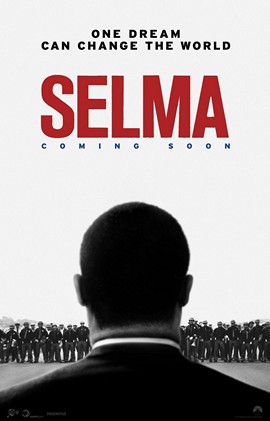 “Selma,” is a thought-provoking new film from director Ava DuVernay. This work is receiving a great deal of attention for both its dramatization of the events leading up to the historic 1965 Selma to Montgomery voting rights march and its depictions of the Rev. Dr. Martin Luther King, Jr. and President Lyndon B. Johnson–who often comes across as someone who is a reluctant convert to the cause of civil and political rights for all Americans.


 The RASHAD Center, Inc.