When one of my cousins informed me that I was not “invited” to the December 2014 homegoing services for his father (my mother’s brother), I was forced to admit something that I had long suspected. Homegoings, in my opinion, really are for the living: a chance to mourn loss, celebrate life, and do other things that would fill a small book about Life and Death in the African Diaspora.
(As far as I know, this “un-invitation” to a homegoing was the first in our family’s rich history, which is the subject of another book.) No worry, I participated in our family’s 2014 Pre-Christmas Concert in Cleveland, and had a great time singing background for my incredibly talented siblings –since they weren’t “invited” to the services either– and I realized that I really like concerts and family reunions much better than homegoings. Like it or not, I also understand that homegoings are a part of life.
Last week, as I prepared for our family reunion in Marianna, Arkansas, I also found myself preparing for my former mother-in-law’s homegoing services at our family church in Cleveland — because I wanted to support my sons and their cousins, especially, in the wake of their grandmother’s passing. After all, homegoings really are, in my opinion, for the living.
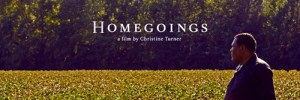
Many caring, African American business professionals–and scholars– have long sought to understand the importance of these death care services in African American history and culture. If you would like to know more about this rich cultural history, please check out the trailer for Christine Turner’s documentary film, “Homegoings,” at http://www.pbs.org/pov/homegoings/. This work focus on Isaiah Owens and his role as a keeper of his community’s funeral traditions.
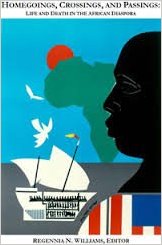
You are also invited to review my book Homegoings, Crossings, and Passings: Life and Death in the African Diaspora to learn more about this topic. Available on Amazon.com.

About Dr. Regennia N. Williams, Founder, President, and Executive Director
Dr. Regennia N. Williams is the Founder and Executive Director of The RASHAD Center, Inc., a Maryland-based non-profit educational corporation.
Williams holds a PhD in Social History and Policy from Case Western Reserve University in Cleveland, Ohio. A native Clevelander and a four-time alumna of Cleveland State University, information on RASHAD's “Praying Grounds, African American Faith Communities: A Documentary and Oral History” project is now available online at www.ClevelandMemory.org/pray/, a site that is maintained by CSU's Library Special Collections, home of the Praying Grounds manuscript collections. Praying Grounds was the primary inspiration for the launching of the Initiative for the Study of Religion and Spirituality in the History of Africa and the Diaspora (RASHAD) at CSU, and links to RASHAD's scholarly journal and newsletter are also available on the Praying Grounds site. On April 28, 2020, the RASHAD Center, Inc. became a tax-exempt 501(c)(3) nonprofit organization.
In 2010, Dr. Williams was a Visiting Fulbright Scholar at Nigeria’s Obafemi Awolowo University, where she taught history and directed a RASHAD-related oral history project that focused on the role of religion in recent Nigerian social history. Other research-related travels have taken her to Canada, China, France, South Africa, and Austria.
In 2013, she conceived and produced “Come Sunday @ 70: The Place of Duke Ellington’s Sacred Jazz in World History and Culture, c. 1943-2013,” a project that included scholarly presentations and performing arts activities. From September 1993 until May 2015, she was a faculty member in the Department of History at Cleveland State University. She served as a Fulbright Specialist at South Africa's University of the Free State in the summer of 2019, and completed a short-term faculty residency at Howard University in the fall of 2019. She is based in Cleveland, Ohio.
As a public scholar, her current research projects focus on African American history and culture, especially as it relates to music, religion, and spirituality. She is a member of the Oral History Association, the Western Reserve Historical Society, and the National Museum of African American History and Culture.


 The RASHAD Center, Inc.