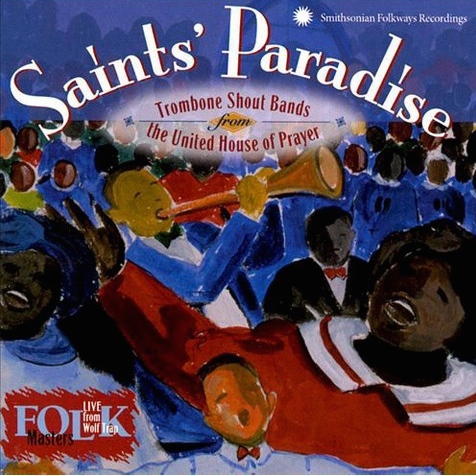
Audio CD cover for Smithsonian Folkways’ 1999 live recording of trombone shout bands from the United House of Prayer for All People.
From oral history research opportunities and shopping for curios in Newport News,Virginia to the 2016 Annual Meeting of the American Alliance of Museums and the musical traditions of trombone “shout bands” in Washington, D.C., the last full week in May seemed to offer something for everyone interested in the arts and humanities.
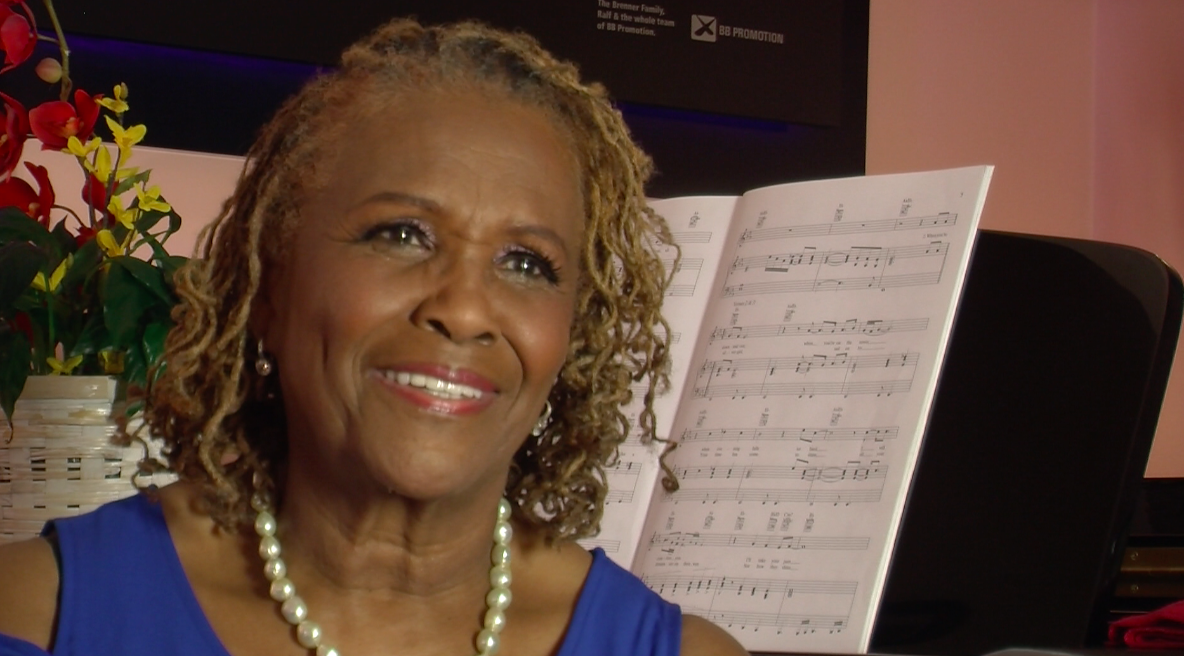
Vocalist Queen Esther Marrow is shown here in a still from her May 23, 2016 oral history interview in Newport News, Virginia.
For me, this amazing week-long journey began with a May 23rd drive from my Maryland home to Newport News, Virginia. This road trip was absolutely beautiful, despite some occasional rain during the late morning.
By early afternoon, the sun was shining, and my oral history narrator, Virginia native Queen Esther Marrow, was ready to share the incredible story of her life in music, which includes her early years as a singer in the choir and a smaller female ensemble in the United House of Prayer for All People, a 1965 New York audition for Duke Ellington (with Billy Strayhorn on piano), two years of American performances and international concert tours with the Ellington Orchestra, sharing the stage with gospel legend Mahalia Jackson, starring in a Mahalia Jackon-inspired Broadway production, and founding and touring Europe with the Harlem Gospel Singers for the last 27 years. (Oral history research never disappoints!)
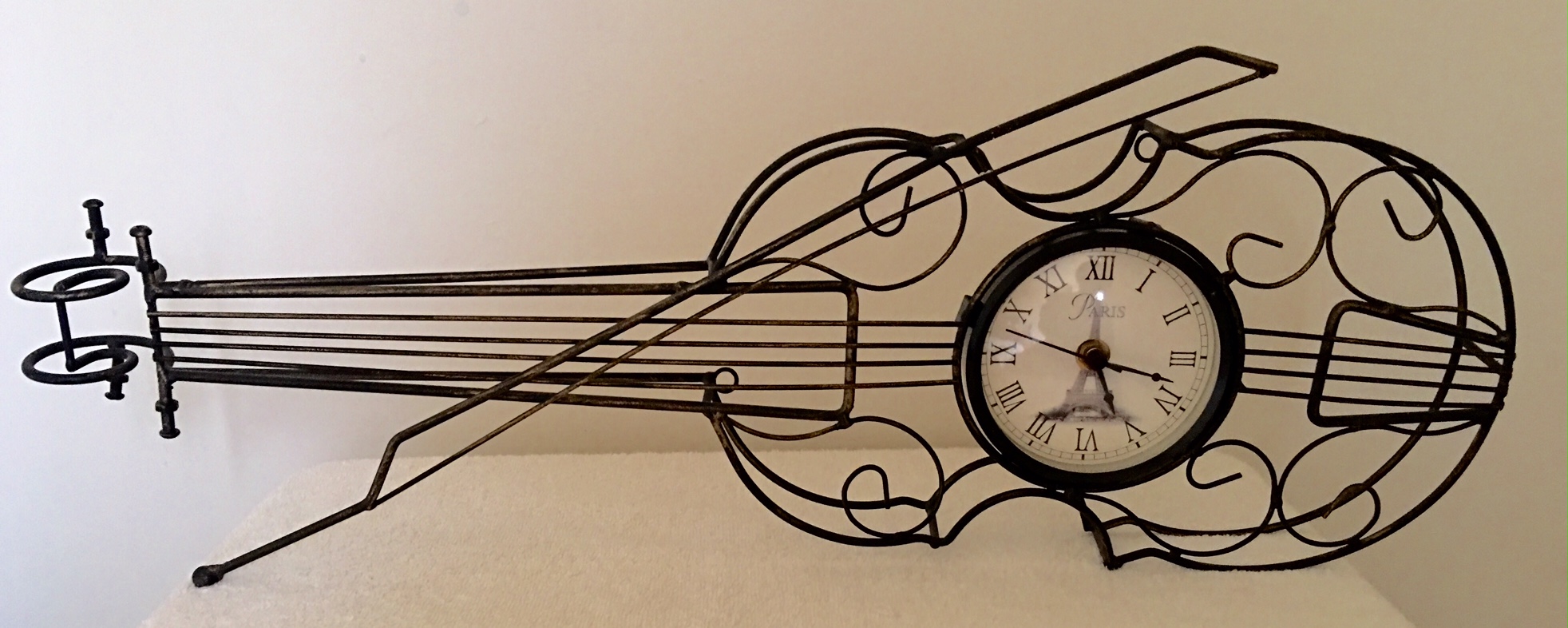
When I noticed this violin clock in a Virginia consignment shop, it was love at first sight!
Knowing that I would be spending two additional nights in nearby Williamsburg, Virginia, I made plans to check out the city’s restaurants and shops. My favorites were the Food for Thought Restaurant and the Revibe shop, where I purchased this violin clock.
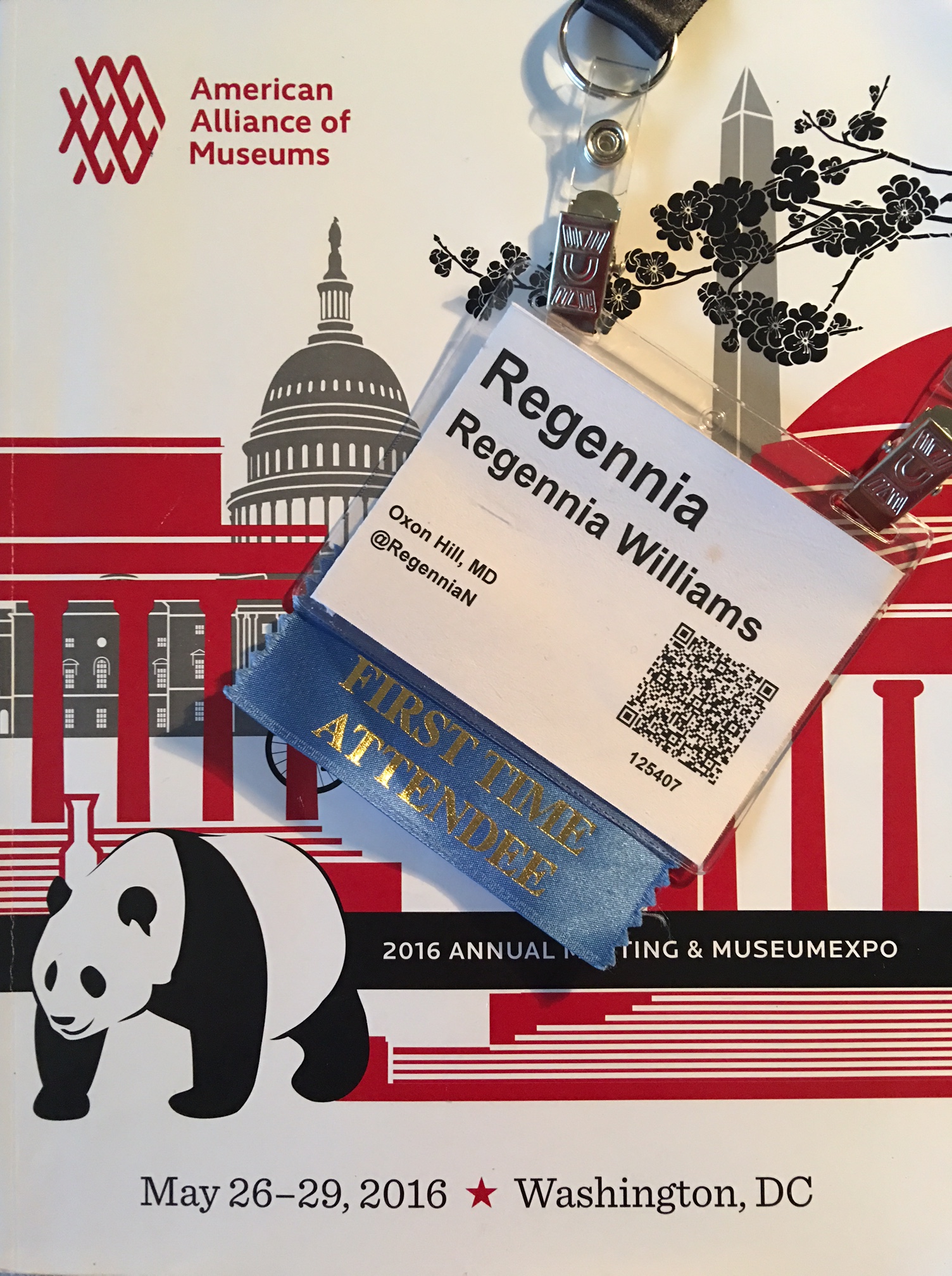
The AAM program booklet and my name badge.
On the way home on Wednesday, I ran into my first major “welcome to the District” traffic jam since my March 1st move to Metro D.C. The delay was a bit unnerving, but I was able to get the oral history research project’s photographer to Union Station on time, and, later that evening, to make my way to the Walter E. Washington Convention Center for a “speed networking” session at the 2016 Annual Meeting of the American Alliance of Museums.
From beginning to end, AAM 2016 was engaging and enlightening, and I spent much of my time in a variety of sessions related to the “Career Management,” “Collections Management,” and “Development and Membership” tracks.
At the final session on Sunday morning, Dr. David J. Skorton, Secretary of the Smithsonian Institution and General Chair for the 2016 meeting, reminded attendees that those who are part of the museum world must continually reach out and engage members of the surrounding community, or run the risk of becoming irrelevant.
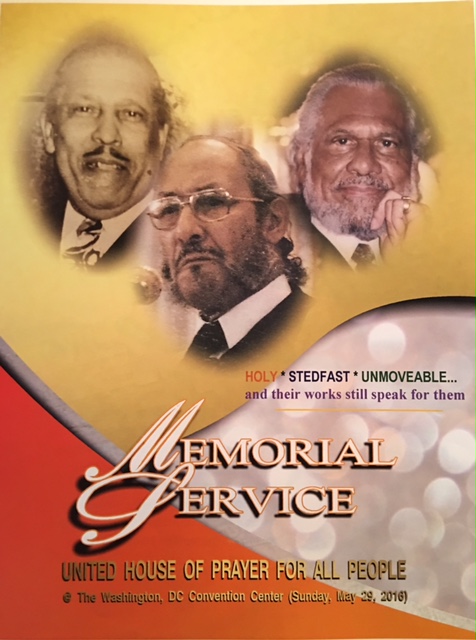
Sunday, May 29, 2016 Memorial Service program bulletin for the United House of Prayer for All People.
With Dr. Skorton’s message in mind, I decided to take advantage of the opportunity to fellowship with members of the United House of Prayer for All People, since they, too, had scheduled a major Memorial Day Weekend gathering at the Washington Convention Center. During the service, I experienced firsthand the power of the “shout bands” that Queen Esther Marrow had described in her oral history interview –and whose music had been showcased in public festivals and recorded on the Smithsonian’s Folkways label.
In that music-filled religious service, I also gained a greater appreciation for the Smithsonian’s ongoing community engagement efforts, and the role that religious institutions might play in enhancing public awareness of the importance of the arts and humanities in American life. Needless to say, the final week in May 2016 was one for the history books.


 The RASHAD Center, Inc.