 This week, the Rev. Dr. Sandra Butler-Truesdale formally introduced me to the life story and musical legacy of saxophonist Roger “Buck” Hill (1927-2017), the “Wailin’ Mailman,” who spent decades delivering mail for the US Postal Service, even as he delivered joy-filled jazz in live performances and studio sessions. (*I really love this image that accompanied Michael J. West’s online article for Washington City Paper at http://www.washingtoncitypaper.com/arts/music/blog/20855826/buck-hill-obituary.)
I began by stating that I just received my “formal” introduction to Hill’s work, because I did not know that he was one of the incredible musicians performing on many of the Shirley Horn recordings that I’ve listened to this year.
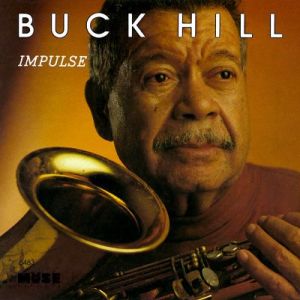 As I join Hill’s relatives, colleagues, and friends in preparing to celebrate his life at an upcoming wake and memorial jam session, I must admit that it would have been great to experience one of his live performances at the Crystal Caverns or some other landmark Capital City jazz venue.
As an educator and a lifelong learner, however, I also have to say that I am grateful that Hill chose to be an artist, mentor, AND teacher–and that his artistry lives on in the music of his former students and in his rich body of recorded works. Thanks, Buck, for the music. Thanks, Dr. Butler-Truesdale and DC Legendary Musicians Inc. (DCLM) for encouraging us to recognize and appreciate artistic genius every day.
According to a Facebook post by Dr. Sandra Butler-Truesdale, “The DC Music Community will celebrate the life and works of saxophonist Roger “Buck” Hill on Sunday, March 26th. Wake, 2-3 p.m.; Memorial Service and Jam Session, 3 p.m., at Westminster Church, 400 I Street SW, Washington, DC.”
Save
Save
Save
Save
Save
Save
Save
Save
Save

About Dr. Regennia N. Williams, Founder, President, and Executive Director
Dr. Regennia N. Williams is the Founder and Executive Director of The RASHAD Center, Inc., a Maryland-based non-profit educational corporation.
Williams holds a PhD in Social History and Policy from Case Western Reserve University in Cleveland, Ohio. A native Clevelander and a four-time alumna of Cleveland State University, information on RASHAD's “Praying Grounds, African American Faith Communities: A Documentary and Oral History” project is now available online at www.ClevelandMemory.org/pray/, a site that is maintained by CSU's Library Special Collections, home of the Praying Grounds manuscript collections. Praying Grounds was the primary inspiration for the launching of the Initiative for the Study of Religion and Spirituality in the History of Africa and the Diaspora (RASHAD) at CSU, and links to RASHAD's scholarly journal and newsletter are also available on the Praying Grounds site. On April 28, 2020, the RASHAD Center, Inc. became a tax-exempt 501(c)(3) nonprofit organization.
In 2010, Dr. Williams was a Visiting Fulbright Scholar at Nigeria’s Obafemi Awolowo University, where she taught history and directed a RASHAD-related oral history project that focused on the role of religion in recent Nigerian social history. Other research-related travels have taken her to Canada, China, France, South Africa, and Austria.
In 2013, she conceived and produced “Come Sunday @ 70: The Place of Duke Ellington’s Sacred Jazz in World History and Culture, c. 1943-2013,” a project that included scholarly presentations and performing arts activities. From September 1993 until May 2015, she was a faculty member in the Department of History at Cleveland State University. She served as a Fulbright Specialist at South Africa's University of the Free State in the summer of 2019, and completed a short-term faculty residency at Howard University in the fall of 2019. She is based in Cleveland, Ohio.
As a public scholar, her current research projects focus on African American history and culture, especially as it relates to music, religion, and spirituality. She is a member of the Oral History Association, the Western Reserve Historical Society, and the National Museum of African American History and Culture.

 This week, the Rev. Dr. Sandra Butler-Truesdale formally introduced me to the life story and musical legacy of saxophonist Roger “Buck” Hill (1927-2017), the “Wailin’ Mailman,” who spent decades delivering mail for the US Postal Service, even as he delivered joy-filled jazz in live performances and studio sessions. (*I really love this image that accompanied Michael J. West’s online article for Washington City Paper at http://www.washingtoncitypaper.com/arts/music/blog/20855826/buck-hill-obituary.)
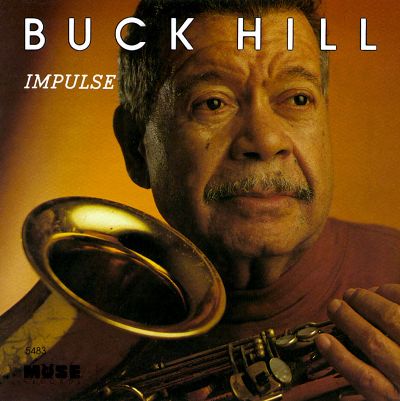 As I join Hill’s relatives, colleagues, and friends in preparing to celebrate his life at an upcoming wake and memorial jam session, I must admit that it would have been great to experience one of his live performances at the Crystal Caverns or some other landmark Capital City jazz venue.


 The RASHAD Center, Inc.