

Entrance to the African Burial Ground National Monument in New York City.
As an educator and an arts lover, I have always been very proud of the fact that history, my chosen field of study and, by definition, one of the humanities, invites people to give careful consideration to the ways in which cultures, institutions, and nations have changed over time.
Recently, Dr. Sandra Jowers-Barber, Director of the Division of Humanities at the University of the District of Columbia’s Community College, invited me to serve as one of the faculty participants in a public history activity that included a visit to New York’s African Burial Ground National Monument. These kinds of student-centered excursions, my ongoing oral history research on jazz, and current debates about the future of federal support for the arts and humanities programs (among others) have convinced me that humanity still needs the humanities — perhaps more than we have ever needed them in the more 50-year history of the National Endowment for the Humanities (NEH).

Life-sized wax figures in the gallery of the African Burial Ground National Monument depict a funeral and burial scene among enslaved Africans in America.
My views on this topic are directly related to the following definition from the NEH website:
“The term ‘humanities’ includes, but is not limited to, the study and interpretation of the following: language, both modern and classical; linguistics; literature; history; jurisprudence; philosophy; archaeology; comparative religion; ethics; the history, criticism and theory of the arts; those aspects of social sciences which have humanistic content and employ humanistic methods; and the study and application of the humanities to the human environment with particular attention to reflecting our diverse heritage, traditions, and history and to the relevance of the humanities to the current conditions of national life.”
–National Foundation on the Arts and the Humanities Act, 1965, as amended
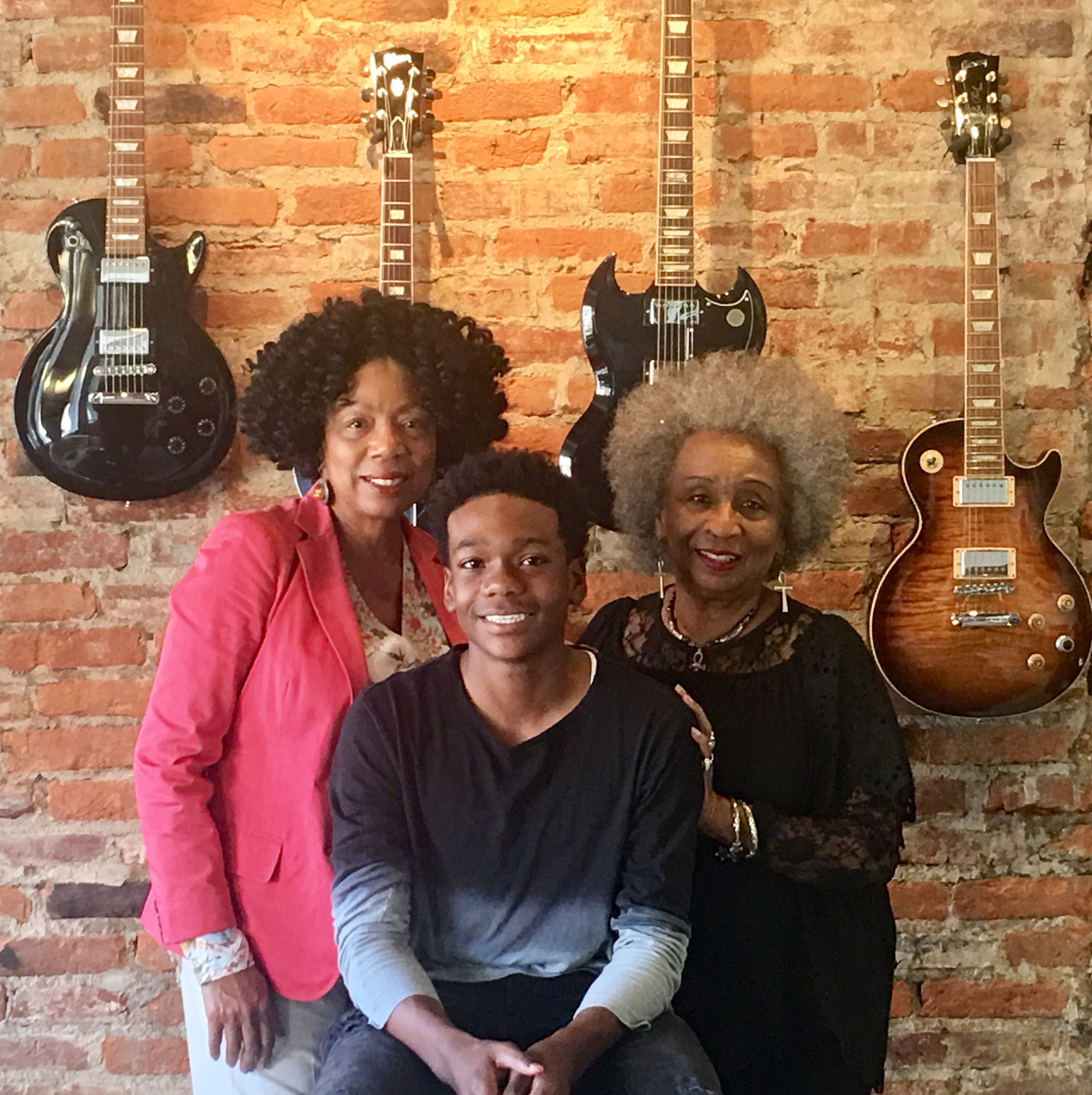
Pictured here in the DC offices of Gibson Guitar are (left to right) Coniece Washington (vocalist), Je’Lan Harwell (guitarist), and the Rev. Dr. Sandra Butler-Truesdale, founder and director of DC Legendary Musicians, Inc. and co-author with Dr. Regennia N. Williams of Washington DC Jazz (under contract with Arcadia Publishing.) Dr. Williams interviewed Ms. Washington and Mr. Harwell for the Washington DC Jazz Oral History Project on May 3, 2017.
Decisions that our predecessors made have shaped our lives in a myriad of ways. When future generations examine the evidence related to decisions about our investments of time, talent, and treasure, they will gain a better understanding of what we valued and held sacred.
History has taught me that investments in humanity and the humanities pay big dividends, and that is a lesson that I try to pass on to others.


 The RASHAD Center, Inc.