
“We are very familiar with the landscape, the land, and the people. We have a rich history in that part of Texas.”—Aaron Myers
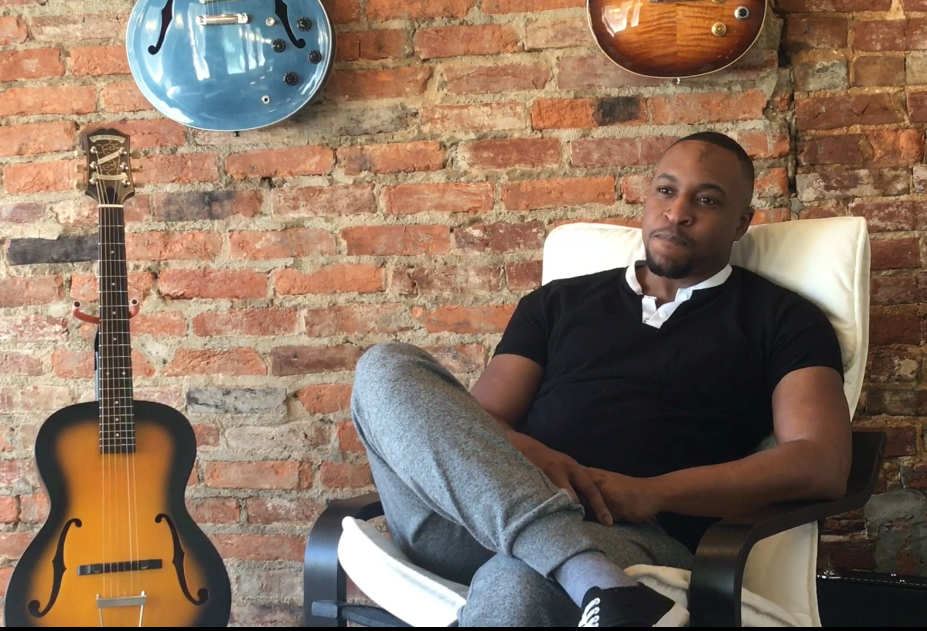
Aaron Myers
AARON MYERS—a Texas native, has worked as a professional jazz vocalist for 14 years. He also has more than 20 years’ experience in music ministry, and he plays piano, keyboards, and the Hammond B-3 organ. Myers is Board Chairman for the Capitol Hill Jazz Foundation. During his interview for the Washington DC Jazz Oral History Project, he discussed, among other things, his childhood in rural Goodlow, Texas, a Black town, and the influence of his extended family.
“I attended Kerens ISD (Independent School District). Kerens is unique. It was a cotton capital, I guess you could say. I was raised in a sharecropping community, a primarily Black sharecropping community called Goodlow, Texas. At the time the population was like 312.”
“Kerens was the center little town of about 1,700 people, but all of the little rural areas around there sent their children to school in Kerens. So, you had K-12 on one campus, and many of the teachers who taught there had been teaching for 20, 30, 40 years. Me and my mom had many of the same teachers. My family has been in that area since about 1860, 1870.”
“We are very familiar with the landscape, the land, and the people. We have a rich history in that part of Texas. My grandfather was a farmer, a sharecropper, and my mother. They picked cotton up until the 1970s; well, late 60s, early 70s.”
“Now, Kerens integrated in 1966. The county seat–which is Navarro County, Corsicana–they integrated, I believe, in 1970. So, there was really no Civil Rights Movement where I’m from. There was a rich history of the Black school, the segregation at the time. When you hear the older people talk about it, they talk about it a little more, sometimes, pleasingly, because they had their own stores, their own doctors. They had their own funeral homes, their own whatever they needed there in the community.”
“The community seemed nicer, it was kept nicer, and then integration happened, and everybody went up to the White stores and abandoned the Black stores. Of course, the White people never came down there. That area was full of farmers and laborers. My grandmother was not only a farmer’s wife who picked cotton, she was also a maid. She kept the house, usually, of the people whose property they were sharecropping on.”
“Then they got out of that, and gramps went to work in the lumberyard. I think it was the late 60s, ‘68, ‘69. He went to work in the lumberyard, and then they went on from there. But, you know, when you sharecrop for so long, you don’t get certain benefits, as you would get as you retire, so my grandfather worked until he was 88. He worked still in a laborer’s type of position. He cleaned a washeteria every night. He opened, closed it, and cleaned it. He also would open and clean filling stations—gas stations that were around the area.”
“He also picked up cans. We would pick up cans, crush them, and take them to the weight place . . . We would sometimes go down to the creek; sometimes people would throw stuff out, and we would get stuff out and take it to the place where we could weigh it, for metal, at least. He did that until he was about 88 or 89. He died at 99, so he only enjoyed about 10 years of retirement, per say; the last two years in ill health, but still mobile.”
“As a young person, my grandparents were usually the age of everyone else’s great grandparents.”
Interview Date: May 3, 2017
All Interviews Conducted, Recorded, and Reviewed by
Dr. Regennia N. Williams
Life Member, Oral History Association
Founder and Director, The RASHAD Center, Inc.
For more information, please visit: https://rashadcenter.wordpress.com/.
*Photograph (Still from Oral History Video, Recorded at Gibson Guitar, Inc.) Courtesy of Dr. Regennia N. Williams
Aaron Myers, Excerpt from Oral History Interview
Aaron Myers, Kennedy Center, Millennium Stage
#WashingtonDCJazz
#DCLegendaryMusicians
#OralHistoryRock


 The RASHAD Center, Inc.