The Rev. Dr. Sandra Butler-Truesdale
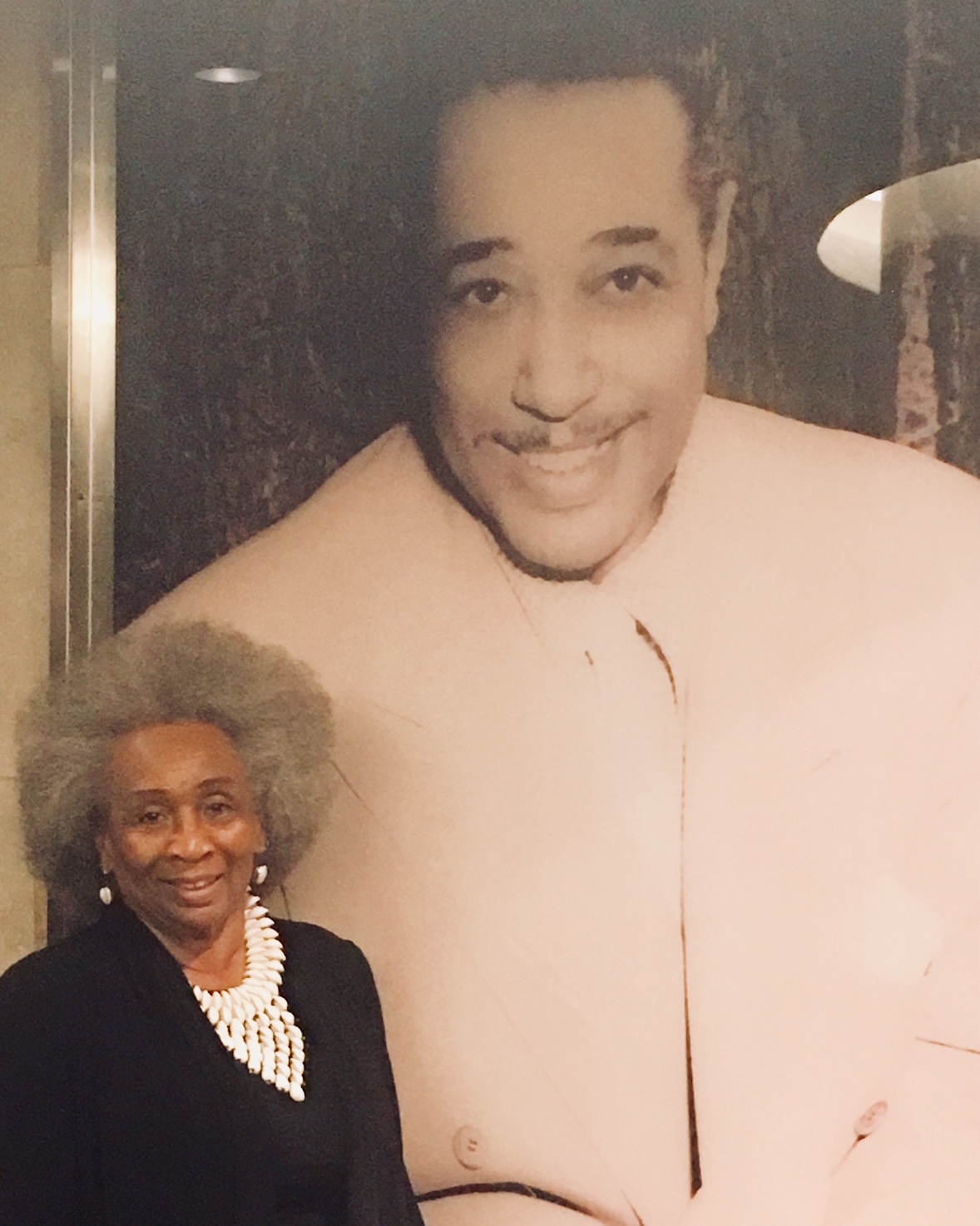
THE REV. DR. SANDRA BUTLER-TRUESDALE is the founder and director of DC Legendary Musicians, Inc. I interviewed her on May 9, 2017 for the Washington DC Jazz Oral History Project. That interview took place at the historic Howard Theatre, and I am pleased to share part of that interview with you.
*The following passages contain excerpts from the full interview.
“This is my home. I am a fourth-generation Washingtonian. I call myself a Washington DC historian. It’s an unofficial title only because I am not a learned historian. I did not get a degree as a historian. But, because I have been here all my life, and, somehow people are always asking me questions about Washington DC, Channel 24 gave me that title as a historian for Washington, DC . . .”
“I am going to tell you that there are two Washington DCs. There is the ‘Federal City ‘and then there is the ‘Community’ part of Washington DC. I am not a ‘Federal City’ historian. I am a ‘Community’ historian. That is different, because a lot of people don’t really know that there is a city that surrounds the federal enclave. . . . There are people who really don’t know that there are people who actually live in Washington DC.”
“There is an endearment, I think, among those of us who were born here, who are residents here. As a matter of fact, there is, according to those of us who were born here, a difference between the ‘Washingtonian’ and the ‘Native Washingtonian.’ There is even a difference in ‘how many generations of Washingtonians’ you think you are. . . Terms of endearment: ‘Native Washingtonian’ and ‘Washingtonian.”. . . I am a fourth-generation ‘Native Washingtonian!’”
“. . . The whole city is mine, but I am a “Northwest Girl.” My mother and my grandmother and my great grandmother all were from Northwest Washington. We come from what was once known as “Midcity” and is now known as Dupont Circle. I was raised–my mother, grandmother, and great grandmother–at 1458 Corcoran Street NW, Washington DC . . . Northwest . . .”
“. . . I heard a young minister, William Lamar from Metropolitan AME Church, say, ‘All music is God’s music.’ I had never really thought about it that way. I had never really thought about ‘secular,’ in particular. I always loved music. I was raised on March and Jazz and Classical music I became involved in religious music at the age of nine, at the Church of God pastored by Elder Lightfoot Solomon Michaux. I sang in several choirs. I still had not figured out that there was a difference in the music. Dr. Lamar explained that for me. [He is] a brilliant minister in the AME faith.”
Interview Date: May 9, 2017
All Interviews Conducted, Recorded, and Reviewed by
Dr. Regennia N. Williams
Life Member, Oral History Association
Founder and Director, The RASHAD Center, Inc.
For more information, please visit: https://rashadcenter.wordpress.com/.
*Photograph by Dr. Regennia N. Williams; Courtesy of Dr. Regennia N. Williams.
DC, Legendary Musicians, Inc.
#WashingtonDCJazz
#DCLegendaryMusicians
#OralHistoryRocks


 The RASHAD Center, Inc.