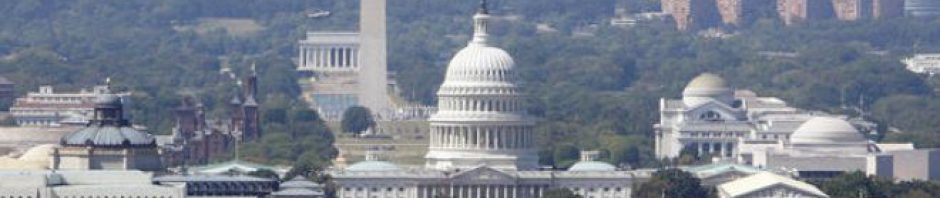
“I am always going to be a Washingtonian. I’ve been in New York for 13 years, but I still represent Washington DC!” –Corcoran N. Holt, 2017
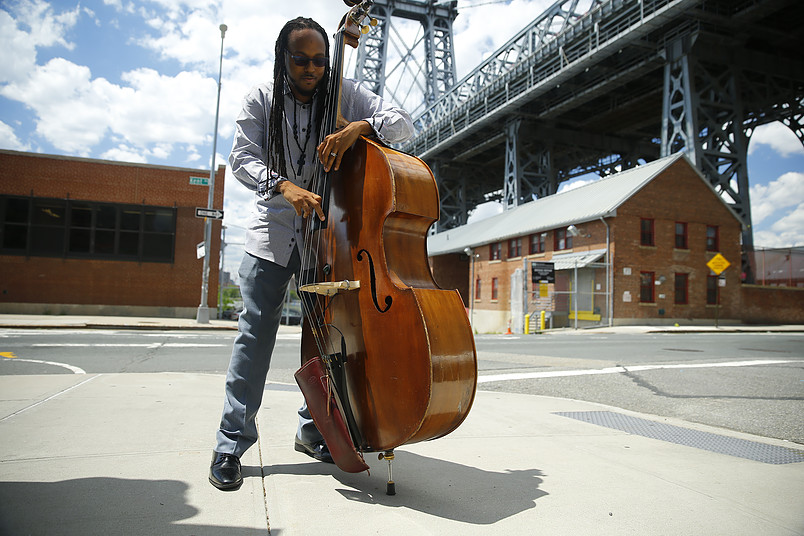
Corcoran N. Holt
CORCORAN N. HOLT is both a freelance bassist and a group leader in his own right. An alumnus of the Duke Ellington School of the Arts and the DC Youth Orchestra, he completed his undergraduate studies at Shenandoah Conservatory in Virginia, and he earned his graduate degree at Queens College in New York. His key musical influences include Duke Ellington, Keter Betts, Reggie Workman, Paul Chambers, Ray Brown, John Coltrane, Miles Davis, Charlie Parker, Kenny Garrett, Christian McBride, Davey Yarborough, and Holt’s father, Ibrahim Diakhate (formerly Keith Lamarr Holt), among others. During his December 19, 2017 telephone interview for the Washington DC Jazz Oral History Project, Corcoran Holt admitted that, during his college days, he “was always coming back to DC!” Later, when he moved to New York, he continued to return to DC, for performances at Bohemian Caverns, Blues, Alley, Twins Jazz and other venues and to spend time with family and friends. For these reasons, Holt—who also holds the record for our longest oral history interview to date, is the first narrator to be included in Part II of this project, “Washingtonians-at-Large.”
“I have my own group, the Corcoran Holt Quintet, as well as the Corcoran Holt Ensemble, which is the larger group. I play with a lot of different groups on the scene here in New York as well as around the world, but the group that I’ve currently been a part of, that tours quite a bit, and that I’ve been recording with, primarily, is the Kenny Garrett Quintet. I have been with that group for eight years . . . Right now, I am really focusing in on getting my project out in the next couple of months, which is under my own name. . .”
“ . . . I have worked as a professional musician since I was 17, when I was still at Duke Ellington [School of the Arts] . . . I always say that once you are paid for a gig, then [musicians] can say they are professionals. My first time getting paid playing the bass was when I was still at Ellington. Then, as far as my career [is concerned], it really got started after I graduated from Ellington in 2000. Ever since then, this has been my only career, the only thing that I have every done—except for working at the Department of Defense for two months, as a summer job when I was at college . . .”
“My primary instrument is upright bass. My first instrument that I started on before I ever played bass was West African percussion . . . Djembe . . . Dundun . . . I started on percussion when I was four, and I switched to bass when I was 10. I play both now. I make my living, mostly, as a bass player . . .”
“I was introduced to those drums by my father. All of the instruments that I play, my father introduced me to those instruments. When I was young, when I was, like, four or five, he wanted to get me and my sister involved in the arts . . . So he put me in a drum class which was Wose, the African Drum and Dance Company in North DC . . .”
“ . . . Then I wanted to play the regular drums, the drum set. So, my father went to the Youth Orchestra when I was 10 and tried to sign me up for percussion, but there were no available spots in DC Youth Orchestra for percussion, so he signed me up for bass for two reasons; one of the reasons being my great grandfather, who I share a birthday with, was a bass player in the High Point – Hamlet area of North Carolina. He was a bass player and a music teacher. I am not exactly sure how far he went professionally, but he actually lived next door to John Coltrane, when John Coltrane was a kid . . . My great grandfather taught him bass when he was a little kid. This was before he played saxophone, clarinet, and all those wind instruments.
“My great grandfather was a musician. My grandfather [Clarence Holt] wasn’t a professional musician (This is all on my father’s side.), but he played trombone. Everybody was a music lover. So my dad was like, ‘Okay, there aren’t any available spots in DC Youth Orchestra for drums, percussion, but I am going to sign him up on bass, because our family has history, and also the bass also holds the time along with the drums. It is still a rhythm instrument. It goes hand-in-hand with the drums.’ He thought that would be good for me.”
“ . . . Yeah, it has been good for me. It was a hard instrument to start on, for sure. It took me a few years to really enjoy it. I was still drumming, and I just really wanted to play percussion at first. Davey Yarborough lives across the street from my godparents in Northeast. My father had met him, and they were always talking. Now, Mr. Yarborough wanted me to come to Duke Ellington for bass when I was 13. So I ended up going to Duke Ellington . . .”
“From that point on, I got pretty serious with it, once I was introduced to Jazz. I was playing Classical on bass, and it was cool, but it was very technical. I was trying to find a connection between percussion and the bass . . . Mr. Yarborough was playing with Reggie Workman in a big band at Lincoln Theatre, so I went there when I was 14, when I was at Ellington.”
“Reggie Workman took this solo, this open bass solo. It absolutely blew me away. From that point on, I was like, okay, I can see this is very interesting to me. It was kind of like the first time that the bass was actually very interesting to me, even though I had been playing it for four years. After that I was inspired to really do it. I fell in love with the music at that point, once I got to Duke Ellington, and I knew that was what I wanted to do . . .”
“ . . . I am always going to be a Washingtonian. I’ve been in New York for 13 years, but I still represent Washington DC!”
Interview Date: December 19, 2017
All Interviews Conducted, Recorded, and Reviewed by
Dr. Regennia N. Williams
Life Member, Oral History Association
Founder and Director, The RASHAD Center, Inc.
For more information, please visit: https://rashadcenter.wordpress.com/.
*Photograph Courtesy of Mr. Corcoran Holt.
Corcoran Holt – Dizzy’s Club Coca-Cola, Jazz @ Lincoln Center NYC, September 19, 2017
Corcoran Holt, Kennedy Center, Millennium Stage
#WashingtonDCJazz
#DCLegendaryMusicians
#OralHistoryRocks


 The RASHAD Center, Inc.