 As I continue to explore Black contributions to my twin loves of American music and art, I would be remiss if I did not confess that I am never surprised by the incredibly thought-provoking ideas that artists are willing to share with others.
Sometimes their wisdom comes to the attention of listening and viewing audiences in the form of lengthy oral histories (my personal favorites). At other times, however, it is through direct quotes that are included in articles and books or interview excerpts that are included in documentary films.
Beginning with this post and continuing through the completion of my next book manuscript, I would like to share with you some of the ideas that I am encountering in my research. My hope is that you might decide to check out the primary and secondary sources of these ideas, when your schedule permits, and share the artists’ wisdom with others.
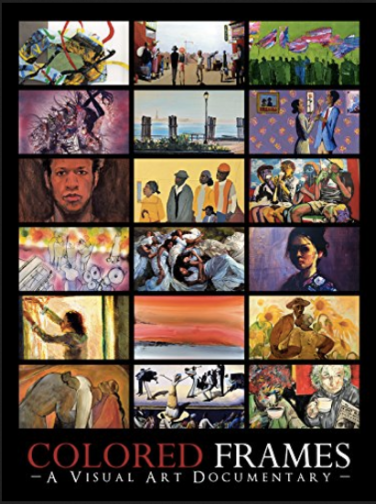
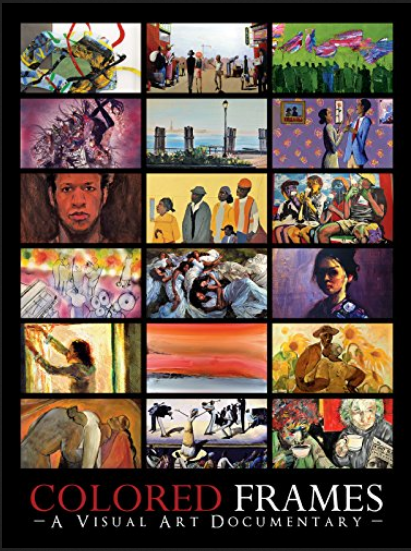
Today’s quote is from artist Michael Singletary, one of the interviewees for Colored Frames,” a visual art documentary by Lerone D. Wilson. In discussing the relationship between jazz and the role of art in American social history, Singletary stated:
Jazz is the perfect artform. It’s the only American artform, I think, that’s really been recognized. If you pattern yourself after the improvisational side, it shows you that there is another way of looking at work.
Just like Picasso looked at Cubism, and he started saying, “You know something, there’s something very interesting about it. Very simple, but right on point.” I think jazz put a lot of artists on point and all of a sudden you get it, and it opens it. That’s what you want is for artists to be able to open that area that’s been closed by society.
If I have piqued your curiosity, and you would like to know more, please visit the website for “Colored Frames” at http://coloredframes.com/. There you will find, among other things, photographs and biographical information for the cast and crew AND a link that will allow you to access and view the complete documentary on Youtube.
I will also include the link here for your convenience: https://youtu.be/Bg0H8WKgQD4.
ENJOY!
Regennia N. Williams, PhD

About Dr. Regennia N. Williams, Founder, President, and Executive Director
Dr. Regennia N. Williams is the Founder and Executive Director of The RASHAD Center, Inc., a Maryland-based non-profit educational corporation.
Williams holds a PhD in Social History and Policy from Case Western Reserve University in Cleveland, Ohio. A native Clevelander and a four-time alumna of Cleveland State University, information on RASHAD's “Praying Grounds, African American Faith Communities: A Documentary and Oral History” project is now available online at www.ClevelandMemory.org/pray/, a site that is maintained by CSU's Library Special Collections, home of the Praying Grounds manuscript collections. Praying Grounds was the primary inspiration for the launching of the Initiative for the Study of Religion and Spirituality in the History of Africa and the Diaspora (RASHAD) at CSU, and links to RASHAD's scholarly journal and newsletter are also available on the Praying Grounds site. On April 28, 2020, the RASHAD Center, Inc. became a tax-exempt 501(c)(3) nonprofit organization.
In 2010, Dr. Williams was a Visiting Fulbright Scholar at Nigeria’s Obafemi Awolowo University, where she taught history and directed a RASHAD-related oral history project that focused on the role of religion in recent Nigerian social history. Other research-related travels have taken her to Canada, China, France, South Africa, and Austria.
In 2013, she conceived and produced “Come Sunday @ 70: The Place of Duke Ellington’s Sacred Jazz in World History and Culture, c. 1943-2013,” a project that included scholarly presentations and performing arts activities. From September 1993 until May 2015, she was a faculty member in the Department of History at Cleveland State University. She served as a Fulbright Specialist at South Africa's University of the Free State in the summer of 2019, and completed a short-term faculty residency at Howard University in the fall of 2019. She is based in Cleveland, Ohio.
As a public scholar, her current research projects focus on African American history and culture, especially as it relates to music, religion, and spirituality. She is a member of the Oral History Association, the Western Reserve Historical Society, and the National Museum of African American History and Culture.

 As I continue to explore Black contributions to my twin loves of American music and art, I would be remiss if I did not confess that I am never surprised by the incredibly thought-provoking ideas that artists are willing to share with others.


 The RASHAD Center, Inc.