
 I believe, now more than ever, that everything happens for a reason–even when I fail, initially, to understand all of the minute details associated with the happenings.
During my current season of change, I have come to the conclusion that my work as the Museum Scholar for the Edward E. Parker Museum of Art is revealing the myriad ways in which our lives are enriched by the arts, and I am glad that I will be in the Buckeye state at least three weeks out of every month this academic year, so that I can gain a greater appreciation for those riches. To my mind, this revelation is worth writing about, especially since I could hardly have imagined a year ago that African American art history would play such a central role in my research activities.
Having spent a good portion of the last two and one-half years working in Maryland, I already knew something about the vast artistic treasures on that state’s college and university campuses, including those at Montgomery College and the University of Maryland, College Park. Although I spent many late nights in the 2017-2018 academic year grading papers at the University of Maryland’s McKeldin Library, it was only after I started to spend more time in Ohio that I began to really focus on the exemplary work of the David C. Driskell Center for the Study of the Visual Arts and Culture of African Americans and the African Diaspora, which is also located on the University of Maryland’s College Park campus.
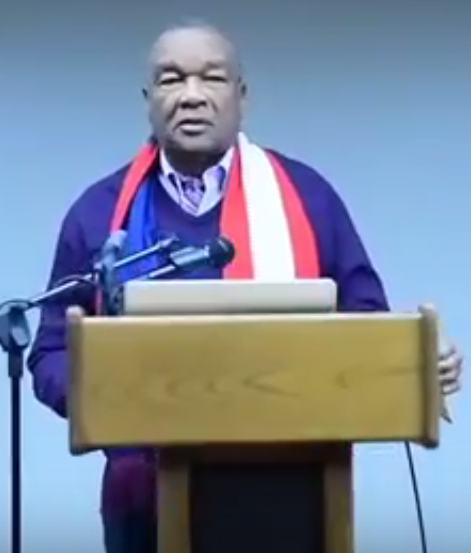
Dr. David C. Driskell addresses the Howard University audience for the May 2017 Professor James A. Porter Colloquium.
Dr. David C. Driskell‘s journey from humble beginnings in the segregated rural South to the halls of academia and some of the world’s most prestigious art galleries and museums has been the subject of numerous books, articles, solo and group exhibitions, and documentary films. The College Park Center is home to many Driskell-related treasures, including the papers of this master painter and printmaker.
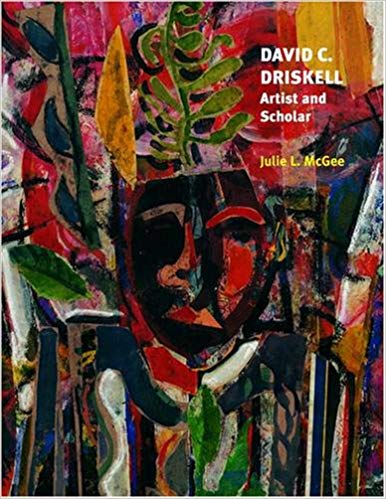
In October 2018, I decided to treat myself to a beautifully illustrated book-length study of the life and work of Dr. David C. Driskell, an award-winning educator who has spent his entire adult life studying, creating, and teaching others about African American art.
By delving into his personal and professional history, I hoped to gain a better understanding of:
- The role of his family, community, church, and elementary and secondary schools in shaping his worldview during his formative years;
- The impact of international travel and post-secondary classroom experiences at Howard University and Catholic University in Washington, DC on his career as an artist, teacher, curator, and scholar; and
- Evidence of the influence of African American Christianity and Traditional African Religion in works produced since the 1970s.
Before I finished my book of choice, David C. Driskell: Artist and Scholar by Julie L. McGee, I had also discovered two excellent videos that shed light on the above topics: his lecture for Howard University’s 2017 James A. Porter Colloquium and the illustrated lecture and panel presentation that are part of the WGBH Forum, David C. Driskell: Artist and Humanitarian. All three sources were wonderfully informative.
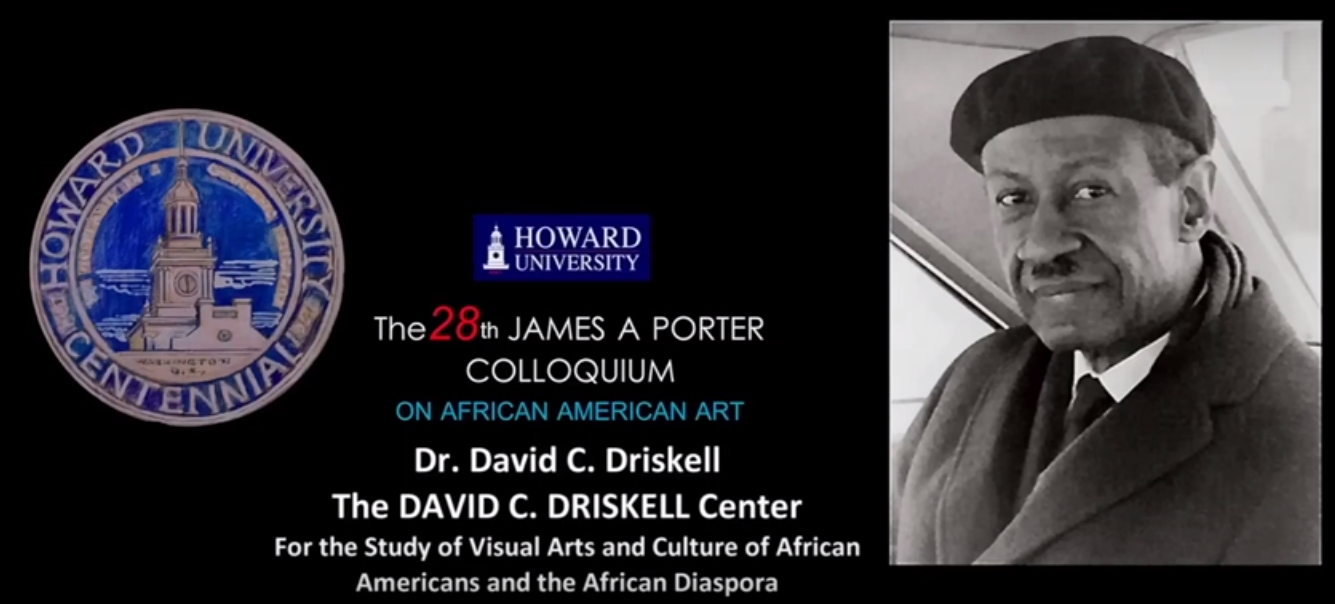
Born in Georgia in 1941 to a minister father and a homemaker mother –both of whom enjoyed gardening, arts, and crafts, David C. Driskell moved with his family to North Carolina at the age of five.
After completing his secondary education in the public schools of his home community, he traveled to Washington DC to pursue an undergraduate degree at Howard University, this despite the fact that he had neither applied nor been admitted to the institution. In time, however, he gained admission to the university and, in keeping with advice from Professor James A. Porter–a distinguished artist, educator, scholar, and mentor, Driskell changed his major from history to art, and became one of the top students in the art program.
Through his work as a studio artist, curator, scholar, public speaker, faculty member at Talladega, Fisk, Howard, the University of Maryland, and other institutions in the USA and abroad, he has touched the lives of thousands of students, colleagues, collectors, and other art lovers around the world.
Please know that you are cordially invited to join me in learning more about Dr. Driskell and other fine and performing artists, as I continue my 2018-2019 journey through the history of African American culture. I have made a conscious decision to take the scenic route, and you can bet that there will be great music for every leg of this journey!
Regennia N. Williams, PhD


 The RASHAD Center, Inc.