Fulbright Scholars: Ambassadors, Teachers, and Learners

By Regennia N. Williams, PhD

Wednesday, July 10, 2019, was the first day of my second visit to the UFS Qwaqwa campus. The first took place in July 2012, during the Global Leadership Summit.

Having arrived safely in Johannesburg, settled into the guesthouse on the Qwaqwa campus of the University of the Free State, received my Wi-Fi and Blackboard credentials, toured (and borrowed books from) the library, received an office assignment and office supplies in the Mendi Humanities Building, and completed my first full week as a co-instructor / guest lecturer in an Oral History Module for third-year students, I am convinced that my next five weeks as a

The is the Qwaqwa campus library, where I expect to learn more about what my friend describes as the “chess game of life.” (No pun intended.)

Fulbright Specialist in South Africa will be incredibly enlightening and wonderfully exciting–just as my five-month Fulbright Fellowship at Nigeria’s Obafemi Awolowo University proved to be in 2010!

In the Fulbright Specialist program welcome letter that I received from the White House (a first for me), President Trump stated, “May you use this time to teach, learn, grow, and make connections that will last a lifetime.”

Some of the titles for my research-related literature review on South African history and culture.

It is my sincere hope that I will be able to do all of these things and more while serving as one of those “citizen ambassadors” that President Trump’s letter also mentioned.

From now through the end of August, I will post at least twice a week on this site, and I invite you to follow my blog as I reflect on my experiences as a cultural ambassador, an American educator in South Africa, and a scholar-learner.

PLEASE NOTE: The blog site for the RASHAD Center, Inc. (https://rashadcenter.wordpress.com/) is not an official U.S. Department of State site or a site approved by Montgomery College.  The views expressed on this site are entirely those of its author, Dr. Regennia N. Williams, and do not represent the views of the U.S. Department of State or any of its partner organizations.


Posted in Uncategorized | Tagged , , , , , , , , , | 1 Comment

“The Pieces I Am” and the Books I Love

For more than 30 years, the works of Toni Morrison have challenged, inspired, and moved me in the most amazing ways.  From The Bluest Eye and Song of Solomon to Beloved and Jazz, her books celebrate the fascinating history and culture of ordinary African American people, and I always look forward to reading her essays and listening to her recorded interviews.

This week, I decided to have my own Toni Morrison party, by treating myself to both a book and a documentary video that focus on her life and work.

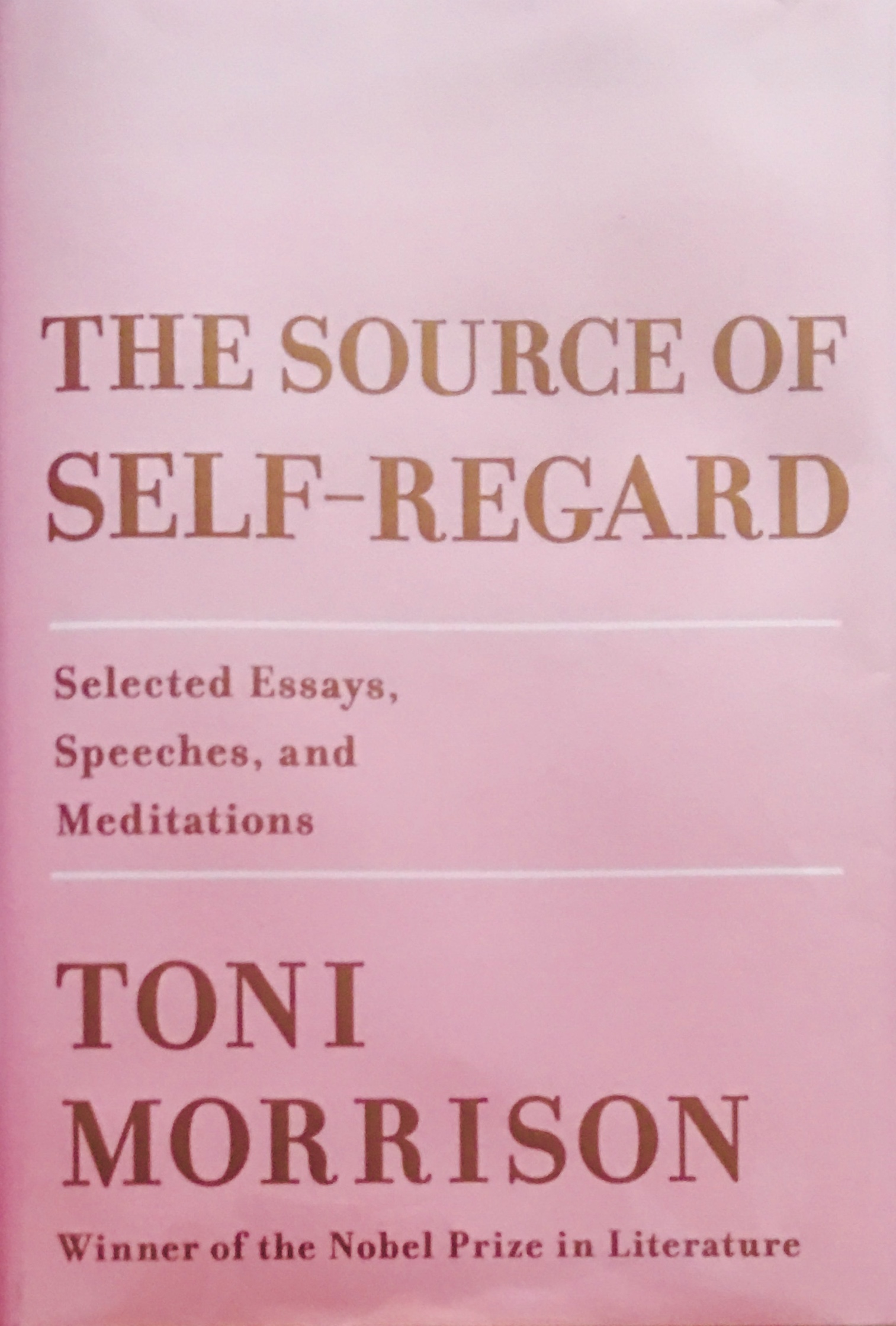
Having borrowed a Cleveland Public Library copy of Morrison’s The Source of Self-Regard: Selected Essays, Speeches, and Meditations (Knopf, 2019) earlier this month, I read and thoroughly enjoyed the author’s “Tribute to Martin Luther King Jr.” and “Cinderella’s Stepsisters” during my lunch hour on Friday.

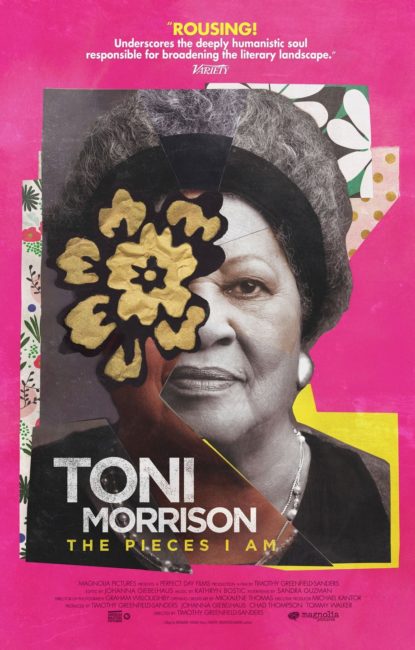
Promotional artwork for Magnolia Pictures’ new documentary on Toni Morrison.

On Saturday afternoon, I watched the critically acclaimed video, “The Pieces I Am,” which opened in theatres this week, and I now understand why the reviewers are raving.  With vintage footage and recent interviews of Morrison, discussions about everything from the author’s Lorain, Ohio roots to her global reading audience, commentary by Sonia Sanchez, Oprah Winfrey, Walter Mosley, and Angela Davis, among others; and the inclusion of historic photographs and contemporary works of visual art,  I found this beautiful film to be enlightening and a joy to watch.

I invite you to check out the book and the documentary about this incredibly gifted Ohio native and one of the world’s greatest living literary artists.

–Regennia N. Williams, PhD

Posted in Uncategorized | Tagged , , , , , , | Leave a comment

RASHAD’s June 2019 “Black Music Month” Newsletter is Now Available

Hello!  You are invited to read the latest issue of our online newsletter.  Downloads are not included in our free ISSUU plan, so do not click on the “Download” ads on the ISSUU site.  If you would like to have a copy of the PDF, just contact me at regennia@gmail.com.  Thanks!

Posted in Uncategorized | Tagged , , , , , , , , , , , , , | Leave a comment

Let’s Celebrate Black Music Month on June 8th!

Please meet me and the Cheyney Thomas Jazz Trio at the Oxon Hill (Maryland) Branch Library on Saturday, June 8th, 1-3 p.m., 6200 Oxon Hill Road.  This event is free, and I hope to see you there!  –Regennia

Posted in Uncategorized | Tagged , , , , , , , , | Leave a comment

RASHAD’s Spring 2019 Newsletter is Now Available!

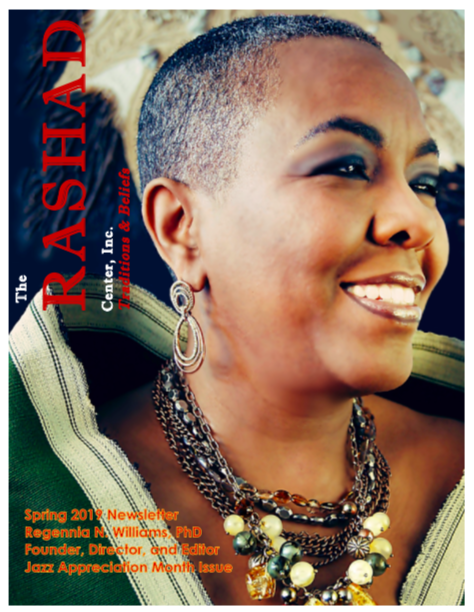
The Spring 2019 issue of our newsletter is now available.  The theme for this Jazz Appreciation Month issue is “My Story, My Song, and My Sources.”  We focus on oral history, local history, photographic history, and jazz history.  You can download the pdf here: RASHAD’s Spring 2019 Newsletter, or read it online at https://issuu.com/regennia.williams/docs/rashad_s_spring_2019_newsletter.

This issue includes the Call for Submissions for the 2019-2020 themed issue, Jazz, Jobs, and Justice: From the American South to South Africa and Beyond, c. 1960-Present.


Posted in Uncategorized | Tagged , , , , , , , , , , , , , | Leave a comment

Join Me in Celebrating Jazz Appreciation Month in April!

JAZZforum, Monday, April 8, 2019

7:00 pm, Free!

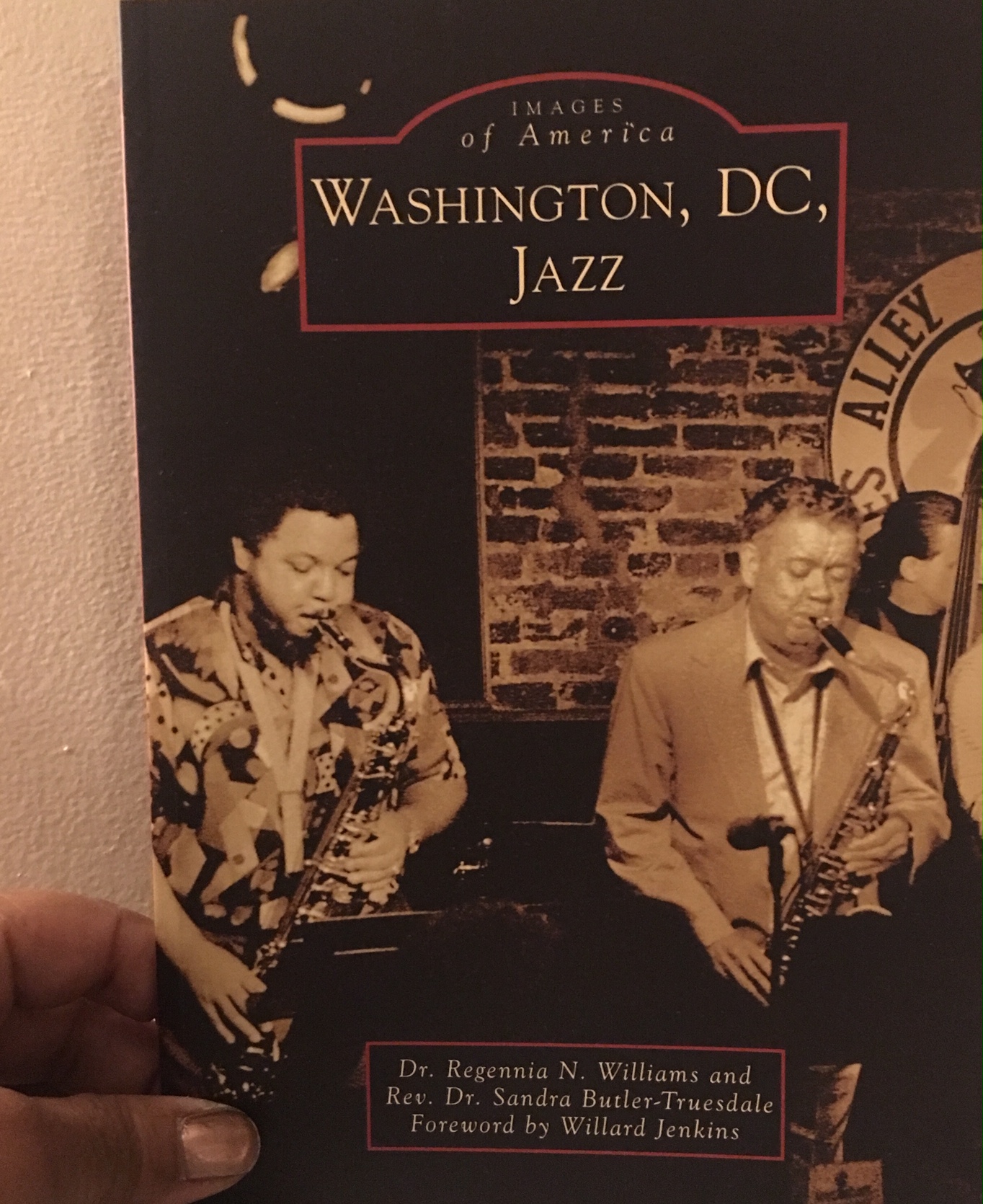
“Washington, DC, Jazz”

UDC – Felix E. Grant Jazz Archives

Featuring

Dr. Regennia N. Williams, Rev. Dr. Sandra Butler-Truesdale, Mr. Willard Jenkins

JAZZforum celebrates the recently published book Washington, DC, Jazz (Images of America) with authors Dr. Regennia N. Williams, Rev. Dr. Sandra Butler-Truesdale, and contributor Willard Jenkins. Washington, DC, Jazz focuses primarily, on the history of straight-ahead jazz, using oral histories, materials from the William P. Gottlieb Collection at the Library of Congress, the Felix E. Grant Jazz Archives at the University of the District of Columbia, and Smithsonian Jazz. This volume also features the work of photographers Nathaniel Rhodes, Michael Wilderman, and Lawrence A. Randall with a foreword by Willard Jenkins.

Location:

Recital Hall, (Performing Arts – Building 46-West)
4200 Connecticut Avenue, NW
Washington, DC 20008

For more information, please visit http://lrdudc.wrlc.org/jazz/.


Posted in Uncategorized | Tagged , , , , , , , , , | Leave a comment

Writing Gives Back Beautiful Gifts–Often in the Form of Published Books!

By Regennia N. Williams, PhD

With this week’s official launch of the Washington, DC, Jazz book, I found myself reminiscing about a research journey that began in May 2016, when my love for Duke Ellington’s liturgical jazz led me to the Newport News, Virginia home of  Queen Esther Marrow.

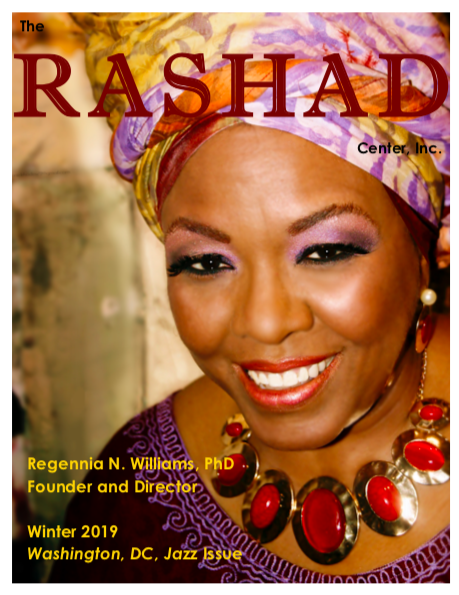
Cover of the RASHAD’s Winter 2019 newsletter.

During that first of many interviews with artists whose narratives would  support the writing of the book,  Marrow recalled her audition with Ellington –with Billy Strayhorn accompanying her on piano, her 1965  performance with the Duke Ellington Orchestra during their first Sacred Concert, and her subseqent tours with the group.

I didn’t know it at the time of that first interview, but on November 29, 2016–the 101st anniversary of Billy Strayhorn’s birth, I would sign the agreement to produce a Washington, DC, Jazz book for Arcadia Publishing’s “Images of America” series.  Over the next two years, I was able to invite dozens of musicians, several photographers, and other individuals to contribute to and benefit from what became our collective research-writing-educational efforts.

I received my first author’s copies in the mail on February 2, 2019.

It was my great pleasure to serve as the co-author, humanities scholar, project director, and layout planner  for Washington, DC, Jazz.  Nevertheless, I breathed a sigh of relief when the Senior Editor at Arcadia wrote in December 2018 to say that  we were “officially done!”

Thanks to everyone who attended the February 10, 2019, book launch at Busboys and Poets in Arlington, Virginia.  I hope to see you at the next book discussion, talk, signing, or other public program in the DMV, Ohio, or some other beautiful place on the planet.  Please visit this site often for program announcements.

Until then, please check out the special Washington, DC, Jazz issue of our newsletter at  https://issuu.com/regennia.williams/docs/final_dc_jazz_newsletter__020719.


Posted in Uncategorized | Tagged , , , , , , , , , , , , , | Leave a comment

Between Praying Grounds and Portrait Galleries: Scholarly Research and Artistic Journeys in Black

Prof. Edward E. Parker

Regennia N. Williams, PhD

In May of 2018, I embarked upon a research journey that has allowed me to build upon several earlier oral history and writing projects, and think about my scholarship and teaching activities in ways that would have been difficult for me to imagine as recently as two years ago.

My work as the inaugural Museum Scholar for the Edward E. Parker Museum of Art has brought about this revolution in my thinking, and Prof. Edward E. Parker, the museum’s owner and founder, has expressed a desire to have his East Cleveland institution serve as a catalyst for a larger artistic “renaissance at Euclid Avenue and Rosalind Avenue,” which is just east of Cleveland’s University Circle community, a hub for cultural, artistic, and educational activities.

“After Midnight,” a painting that Prof. Parker completed during his high school years in Toledo, Ohio.

Prof. Parker–a Pittsburgh native, longtime Ohio resident, former K-12 and post-secondary art educator, and entrepreneur–discovered his love for art while attending elementary school in Toledo.  He completed some of his earliest formal training in the Saturday morning children’s classes at the Toledo Museum of Art, and he continued to use his natural talents and improve his skills through high school and then undergraduate studies at Central State University.

Beginning in the late 1960s, he taught first in Toledo and then in the Cleveland Public Schools.  He also went on to earn a Master’s degree at Kent State University in the early 1970s.  His last full-time teaching position was at Cuyahoga  Community College, where he worked for nearly 20 years on the institution’s western campus.

“Stove Pipe the Master Clown,” a 1982 drawing and the subject of a popular print by Prof. Edward E. Parker.

Prof. Parker has long combined his interests in art, education, and entrepreneurship.  In 1978, he established the Snickerfritz Cultural Workshop for the Arts, and by 2014 he began to work with board members and others to lay the foundation for what is now the Edward E. Parker Museum of Art, a 501(c)(3) nonprofit entity that is home to numerous examples of his own work and works by artists from other parts of the world. In addition to the museum’s galleries, the Edward E. Parker Creative Arts Complex also houses the African Bookshelf gift shop, studio and classroom spaces, a special events center, and Prof. Parker’s personal archives.

Portrait bust of President Barack Obama by Prof Edward E. Parker.

Always a prolific artist, he has produced more than 3,000 works, including drawings, paintings, murals, and sculptures.  With the announcement of his desire to support the research for a series of books for adults and children and a catalog for a major retrospective, Prof. Parker formally launched his latest educational and artistic endeavor.  In addition to the book projects, “Artistic Journeys in Black: An Oral History of African American Art in Greater Cleveland”  will include the first-person narratives of Prof. Parker and many of his long-time colleagues.

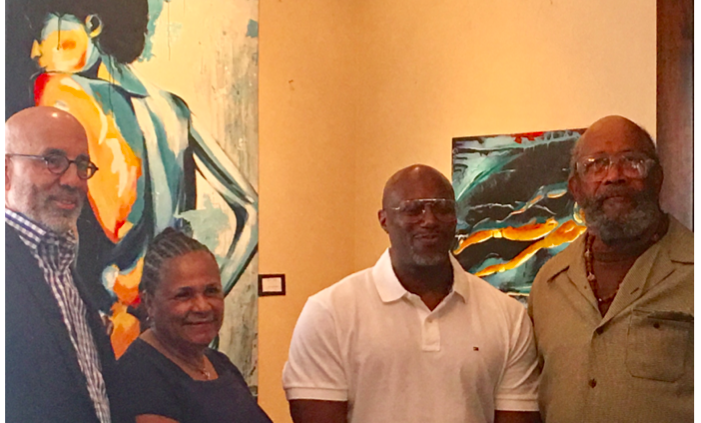
Prof. Edward E. Parker serves as Curator for Shinn House Galleries. The galleries are located at the Mount Zion Congregational Church in Cleveland’s University Circle Community. Professor Parker (right) is pictured here at the May 5, 2018 opening of a show featuring work from the Grafton Correctional Institution’s Art + Freedom Project. With him are (left to right) the Rev. Paul Hobson Sadler, Mrs. Joyce Shinn, and Mr. Eric Gardenhire, director of the Grafton Program.

As the founder and curator of the Praying Grounds Oral History Project, I was especially pleased to learn of Prof. Parker’s work with the Shinn House Galleries at Cleveland’s Mount Zion Congregational Church.  As a member of Mount Zion and an artist whose works on the passion of Christ have been displayed at the church, Prof. Parker helped establish the Shinn House Gallery exhibitions and a related museum-based lecture series with the support of church leaders, patrons of the arts, and community partners in 2018.

With so many interesting and exciting things happening in the nation’s arts and humanities communities in 2019, I know that remaining focused and making significant progress on the research and writing will be a challenging.  But, as members of the 400 Years of African American History Commission will remind us throughout 2019, the journeysof Black people in this part of the world have taken them through eras filled with servitude, chattel slavery, quasi-freedom, Jim Crow segregation, disfrnachisement, and, yes, evidence of real social, cultural, educational, political, and economic progress.

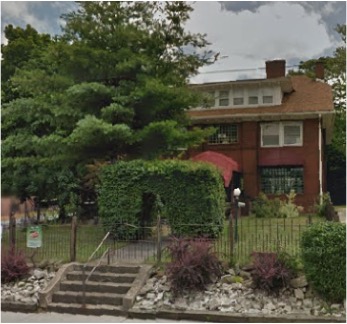
The Edward E. Parker Museum of Art is located at 13240 Euclid Avenue in East Cleveland, Ohio.

It will, therefore, be my great pleasure to spend 2019 focusing on, among other subjects, “One Black Man’s Artistic Journeys: The Life and Work of Edward E. Parker and the Legacy of the Black Arts Movement in Ohio.” This is the working title for the scholarly biography for adults, and I look forward to sharing project updates throughout the coming year. –RNW

For more information on Prof. Parker, please visit the website for The HistoryMakers®.

Posted in Uncategorized | Tagged , , , , , , , , , , , , , , | Leave a comment

1960 What?: Art and the Roots and Fruits of Activism in New York

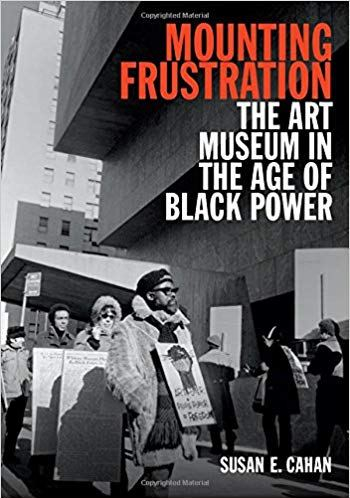
Mounting Frustration Book Cover

Susan E. Cahan’s Mounting Frustration: The Art Museum in the Age of Black Power examines underrepresented artists’ struggles for visibility and inclusion in New York’s museums and galleries and the mainstream art world in general.

For reasons that make perfectly good sense to me as a teacher-scholar,  the 2010s have felt like the “Era of 50th Anniversaries.”  The 1960 election of John Fitzgerald Kennedy as the youngest and first Roman Catholic president of the United States, the 1963 March on Washington, the Civil Rights Act of 1964, the Voting Rights Act of 1965, and so many other milestone events from the 1960s have been at the center of countless museum exhibitions, commemorative programs, and songs in recent years.

The title of this post, as jazz fans know, is taken from one of the tracks on “Water,” the 2010 debut album for vocalist Greg Porter.  Currently, Washington, DC’s Newseum,  is hosting (through January 2, 2019) the “1968: Civil Rights at 50” exhibition. As the description suggests, those viewing the exhibition can, “Explore the events that marked 1968 as a year of anguish for the civil rights movement: the assassinations of the Rev. Dr. Martin Luther King, Jr. and Sen. Robert Kennedy, and a Black Power Protest at the Olympics in Mexico City.”

Information on all of the aforementioned topics is readily available in college-level U.S. history texts that I have used in my classes over the years.  By comparison, however, those same required texts have said very about the 1960s as a watershed period for arts activists who wanted to work with mainstream museums to get their work shown and/or to serve as curators or administrators in those institutions. Those activists were not the separatist artists of the Black Arts Movement, who often receive more attention in textbooks.

In order to gain a better understanding of the relationship of arts activism, the Black Arts Movement, the Free Speech Movement in the social history of New York City, and the mainstream Civil Rights Movement in America  –and to identify new materials for teaching and research purposes, I decided to read Susan E. Cahan’s Mounting Frustration: The Art Museum in the Age of Black Power (Duke University Press, 2016).

I found the book’s discussion of the history (c.1968-1969) of the Metropolitan Museum of Art during the planning and run of the “Harlem on My Mind” exhibition to be especially interesting, although, having just viewed exhibitions of works by Gordon Parks and Dawoud Bey at the National Gallery of Art,  I found it somewhat difficult to imagine a time in the second half of the 20th century when photography was not considered art.  I quickly overcame that difficulty, however, in the interest of acquiring new knowledge.

As Cahan presents them, the arguments of those representing the nationalist and integrationist schools of thought among African American artists are especially compelling.  In addition to the ideas of Romare Bearden and Faith Ringgold, whose work I had long been familiar with, I looked for and found an excellent analysis of the abundant evidence related to the leadership role of artist Benny Andrews in the Black Emergency Cultural Coalition (BECC).

In her discussion of the 1969 formation of BECC, the author noted that on January 9, a group of concerned artists (including Bearden),

. . . met at Benny Andrews’s studio to organize the first of many demonstrations against the [“Harlem on My Mind”] exhibition and form an organization called the Black Emergency Cultural Coalition (BECC).

At this meeting, the group decided to picket the museum and stage media events to publicize their position.  Their primary demands were twofold. First, they protested the absence of African Americans in curatorial positions at the Metropolitan Museum, and second, they rejected the idea that an art museum would have an exhibition of African American culture that contained no painting or sculpture.  They called for the immediate cancellation of the show; the appointment of African Americans to policy-making and curatorial positions; and a more “viable relationship” between the museum and the “total Black community.”

Despite the protests by African American artists–and charges of anti-Semitism and companion protests by members of the city’s Jewish community related to statements contained in the exhibition’s catalog, the show went on as planned.  It is fair to say, however, that, as a result of these types of protests,  the Met’s administration and the administrations of other major museums learned some tough lessons in the late 1960s and early 1970s.  As a result, more institutions began to experiment with decentralization of museum services and programs, the creation of more “community” museums, and incremental changes related to institutional diversity and inclusion.

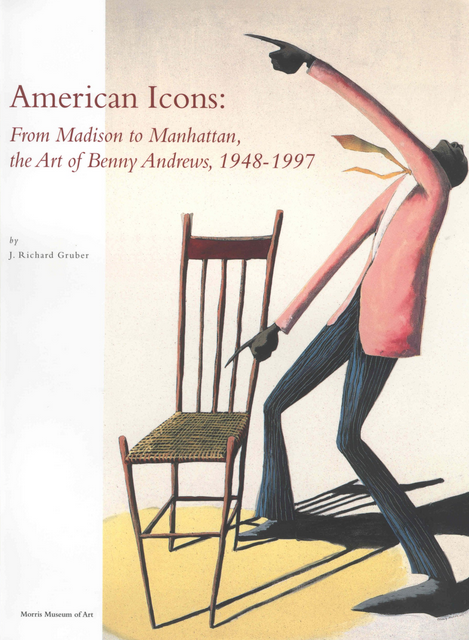
In 1997, the Morris Museum of Art in Augusta, Georgia mounted “American Icons: From Madison to Manhattan, the Art of Benny Andrews, 1948-1997. This is the cover image for the exhibition’s catalog.

Nearly 50 years after the BECC presented its list of demands, some historians and critics suggest that the changes within the museum world have been more evolutionary than revolutionary, as far as people of color are concerned.  Through it all African American artists–including Benny Andrews– continued to produce, show, and sell their art in African American and mainstream settings, both during and beyond the subject era.

J. Richard Gruber, author of the catalog for American Icons: From Madison to Manhattan, the Art of Benny Andrews, 1948-1997,  a major retrospective of Andrews work, suggests that the artist and Queens College educator became even more well-known in the 1960s and 1970s because of his work with BECC and his published articles in the New York Times, which allowed him to share his thoughts on black art with a national audience.  As Gruber states in the 1997 catalog:

By the first year of the 1970s, Benny Andrews had established his reputation not just as a significant artist but also as a spokesman, organizer and writer, as a skilled advocate for issues related to black art and artists.

Benny Andrews  (1930-2006) would later place both the artists struggles and his thoughts on the nature of their progress in a larger historical context during an interview for “Colored Frames”,  a visual documentary,  After stating that he was “lucky enough to receive a reward for his participation” in numerous protests, Andrews reminded viewers that  most participants were not as lucky, and many people (“the masses”) were never recognized for their support, although their contributions were invaluable:

It takes a lot of people to make a little thing . . . Life is like a relay race, and we were lucky that we had the bar for a while, but we got it from somebody, and we passed it on to somebody.  That little stretch that we ran is just a link in a chain that goes both ways. . . You’re no alpha or omega of anything.

Based on the evidence that I have examined thus far, I am convinced that Andrews, who may not have been the “alpha or omega” of activism or Black art in 20th-century America, was one of its most creative and articulate leaders. I am looking forward to incorporating more information about Andrews and BECC in my research, writing, teaching, and community service activities in the new future.


Regennia N. Williams, PhD

Founder and Director of the RASHAD Center, Inc.

Consultant and Museum Scholar, The Edward E. Parker Museum of Art


Posted in Uncategorized | Tagged , , , , , , , , , , , , | Leave a comment

In the Spirit of Creativity: African American Art and the Gospel According to Dr. David C. Driskell

I believe, now more than ever, that everything happens for a reason–even when I fail, initially, to understand all of the minute details associated with the happenings.

During my current season of change, I have come to the conclusion that my work as the Museum Scholar for the Edward E. Parker Museum of Art is revealing the myriad ways in which our lives are enriched by the arts, and I am glad that I will be in the Buckeye state at least three weeks out of every month this academic year, so that I can gain a greater appreciation for those riches.  To my mind, this revelation is worth writing about, especially since I could hardly have imagined a year ago that African American art history would play such a central role in my research activities.

Having spent a good portion of the last two and one-half years working in Maryland, I already knew something about the vast artistic treasures on that state’s college and university campuses, including those at Montgomery College and the University of Maryland, College Park. Although I spent many late nights in the 2017-2018 academic year grading papers at the University of Maryland’s McKeldin Library, it was only after I started to spend more time in Ohio that I began to really focus on the exemplary work of the David C. Driskell Center for the Study of the Visual Arts and Culture of African Americans and the African Diaspora, which is also located on the University of Maryland’s College Park campus.

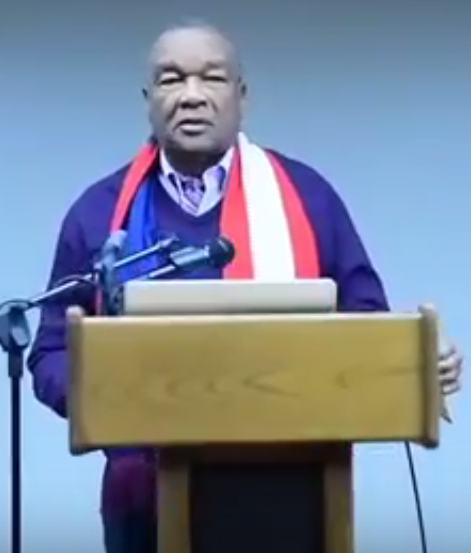
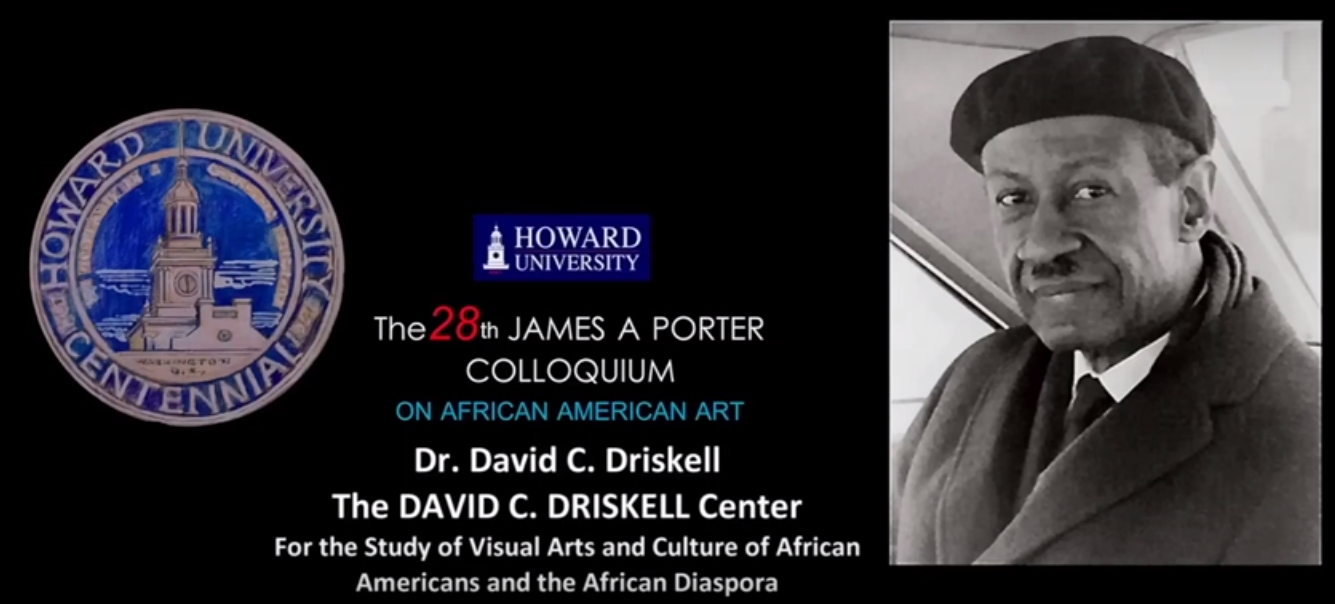
Dr. David C. Driskell addresses the Howard University audience for the May 2017 Professor James A. Porter Colloquium.

Dr. David C. Driskell‘s journey from humble beginnings in the segregated rural South to the halls of academia and some of the world’s most prestigious art galleries and museums has been the subject of numerous books, articles, solo and group exhibitions, and documentary films.  The College Park Center is home to many Driskell-related treasures, including the papers of this master painter and printmaker.

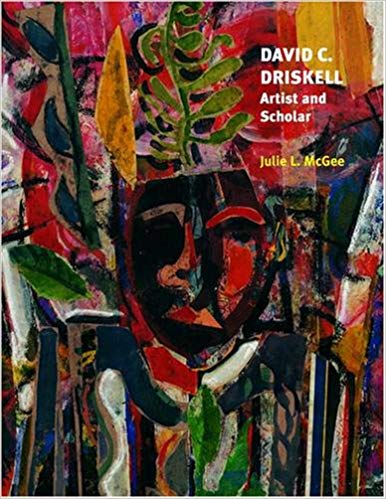
In October 2018, I decided to treat myself to a beautifully illustrated book-length study of the life and work of Dr. David C. Driskell, an award-winning educator who has spent his entire adult life studying, creating, and teaching others about African American art.

By delving into his personal and professional history, I hoped to gain a better understanding of:

  • The role of his family, community, church, and elementary and secondary schools in shaping his worldview during his formative years;
  • The impact of international travel and post-secondary classroom experiences at Howard University and Catholic University in Washington, DC on his career as an artist, teacher, curator, and scholar; and
  • Evidence of the influence of African American Christianity and Traditional African Religion in works produced since the 1970s.

Before I finished my book of choice, David C. Driskell: Artist and Scholar by Julie L. McGee, I had also discovered two excellent videos that shed light on the above topics: his lecture for Howard University’s 2017 James A. Porter Colloquium  and the illustrated lecture and panel presentation that are part of the WGBH Forum, David C. Driskell: Artist and Humanitarian.  All three sources were wonderfully informative.

Born in Georgia in 1941 to a  minister father and a homemaker mother –both of whom enjoyed gardening, arts, and crafts, David C. Driskell moved with his family to North Carolina at the age of five.

After completing his secondary education in the public schools of his home community, he traveled to Washington DC to pursue an undergraduate degree at Howard University, this despite the fact that he had neither applied nor been admitted to the institution.  In time, however, he gained admission to the university and, in keeping with advice from Professor James A. Porter–a distinguished artist, educator, scholar, and mentor, Driskell changed his major from history to art, and became one of the top students in the art program.

Through his work as a studio artist, curator, scholar, public speaker, faculty member at Talladega, Fisk, Howard, the University of Maryland, and other institutions in the USA and abroad, he has touched the lives of thousands of students, colleagues, collectors, and other art lovers around the world.

Please know that you are cordially invited to join me in learning more about Dr. Driskell and other fine and performing artists, as I continue my 2018-2019 journey through the history of African American culture. I have made a conscious decision to take the scenic route, and you can bet that there will be great music for every leg of this journey!

Regennia N. Williams, PhD


Posted in Uncategorized | Tagged , , , , , , , , , , | Leave a comment