By Regennia N. Williams, PhD
Earlier today, I listened to a 1981 videotaped interview of Leontyne Price, whose recorded solo vocal concerts and operatic performances always leave me speechless. In describing the secret of her incredible success, she said something that I never want to forget: “I refuse to allow myself to be overused, because I have things that I want to do with my life.” For Ms. Price, this ability to say no to overuse was as important to her success as was her determination to say yes to family, faith, community, excellent teachers, discipline, hard work, and “play” –which has included gardening.
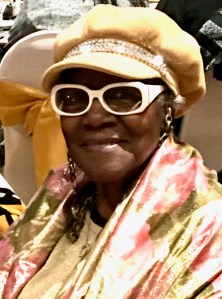
Helen Turner-Thompson, pianist, vocalist, director, and Praying Grounds oral history narrative.
I am still working on creating that perfect balance between work and play. Even as I become better at saying no to things that really are not vital to life, however, I must admit that I am very glad that I can still say yes to Praying Grounds: African American Faith Communities, A Documentary and Oral History. Since I launched this project in 2003, Praying Grounds has been a constant reminder of the importance of faith, family, discipline, and hard work in my life. It has been my great pleasure to help collect–and, now, prepare for publication, the oral history narratives of more than 100 amazing individuals.
Please know that the first volume of RASHAD’s Praying Grounds Book Publishing Project (PGB2P) will focus on the concert Spiritual tradition in African American sacred music, the contributions of Cleveland’s Wings Over Jordan Choir, and the legacy of the Rev. Glenn T. Settle, the group’s founder and the former pastor of the Gethsemane Baptist Church.
This e-book will include evidence from the Praying Grounds digital archive, manuscript materials, related secondary sources, and the oral histories of Helen Turner Thompson, the Rev. Earl Preston, Jr, the Rev. Henry J. Payden, Mrs. Gladys Hauser Bates Goodloe, and many others.
I look forward to announcing the date for the virtual e-book launch by early 2021. –RNW

About Dr. Regennia N. Williams, Founder, President, and Executive Director
Dr. Regennia N. Williams is the Founder and Executive Director of The RASHAD Center, Inc., a Maryland-based non-profit educational corporation.
Williams holds a PhD in Social History and Policy from Case Western Reserve University in Cleveland, Ohio. A native Clevelander and a four-time alumna of Cleveland State University, information on RASHAD's “Praying Grounds, African American Faith Communities: A Documentary and Oral History” project is now available online at www.ClevelandMemory.org/pray/, a site that is maintained by CSU's Library Special Collections, home of the Praying Grounds manuscript collections. Praying Grounds was the primary inspiration for the launching of the Initiative for the Study of Religion and Spirituality in the History of Africa and the Diaspora (RASHAD) at CSU, and links to RASHAD's scholarly journal and newsletter are also available on the Praying Grounds site. On April 28, 2020, the RASHAD Center, Inc. became a tax-exempt 501(c)(3) nonprofit organization.
In 2010, Dr. Williams was a Visiting Fulbright Scholar at Nigeria’s Obafemi Awolowo University, where she taught history and directed a RASHAD-related oral history project that focused on the role of religion in recent Nigerian social history. Other research-related travels have taken her to Canada, China, France, South Africa, and Austria.
In 2013, she conceived and produced “Come Sunday @ 70: The Place of Duke Ellington’s Sacred Jazz in World History and Culture, c. 1943-2013,” a project that included scholarly presentations and performing arts activities. From September 1993 until May 2015, she was a faculty member in the Department of History at Cleveland State University. She served as a Fulbright Specialist at South Africa's University of the Free State in the summer of 2019, and completed a short-term faculty residency at Howard University in the fall of 2019. She is based in Cleveland, Ohio.
As a public scholar, her current research projects focus on African American history and culture, especially as it relates to music, religion, and spirituality. She is a member of the Oral History Association, the Western Reserve Historical Society, and the National Museum of African American History and Culture.



 The RASHAD Center, Inc.