As I continue to explore Black contributions to my twin loves of American music and art, I would be remiss if I did not confess that I am never surprised by the incredibly thought-provoking ideas that artists are willing to share with others.
Sometimes their wisdom comes to the attention of listening and viewing audiences in the form of lengthy oral histories (my personal favorites). At other times, however, it is through direct quotes that are included in articles and books or interview excerpts that are included in documentary films.
Beginning with this post and continuing through the completion of my next book manuscript, I would like to share with you some of the ideas that I am encountering in my research. My hope is that you might decide to check out the primary and secondary sources of these ideas, when your schedule permits, and share the artists’ wisdom with others.
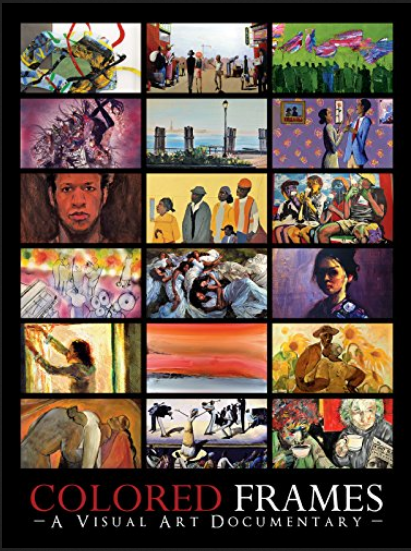
Today’s quote is from artist Michael Singletary, one of the interviewees for Colored Frames,” a visual art documentary by Lerone D. Wilson. In discussing the relationship between jazz and the role of art in American social history, Singletary stated:
Jazz is the perfect artform. It’s the only American artform, I think, that’s really been recognized. If you pattern yourself after the improvisational side, it shows you that there is another way of looking at work.
Just like Picasso looked at Cubism, and he started saying, “You know something, there’s something very interesting about it. Very simple, but right on point.” I think jazz put a lot of artists on point and all of a sudden you get it, and it opens it. That’s what you want is for artists to be able to open that area that’s been closed by society.
If I have piqued your curiosity, and you would like to know more, please visit the website for “Colored Frames” at http://coloredframes.com/. There you will find, among other things, photographs and biographical information for the cast and crew AND a link that will allow you to access and view the complete documentary on Youtube.
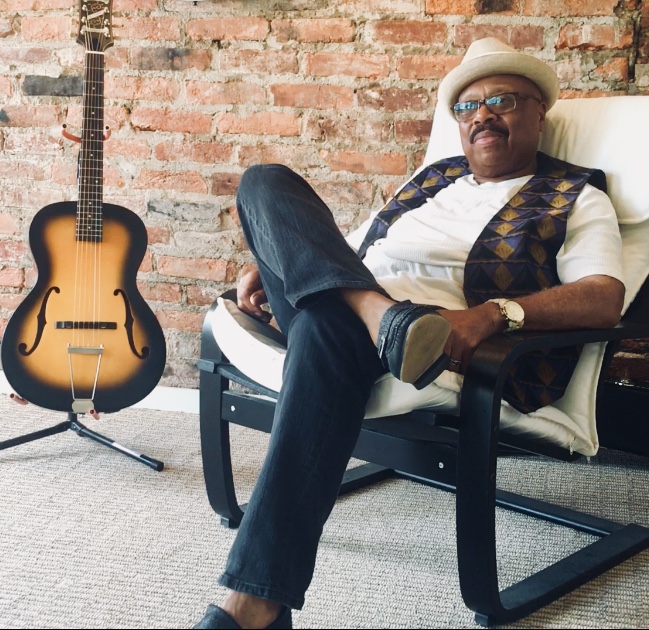
Bandleader and recording artist Mr. Bobby Felder is one of the stellar artists scheduled to perform at the 2018 Hillfest in Washington DC!
The Capitol Hill Jazz Foundation is looking for Volunteers for the upcoming Hillfest events! This opportunity is perfect for Jazz enthusiasts!
The foundation’s mission is to serve the Washington D.C. jazz community by providing a weekly jam session, an annual jazz festival, and arts advocacy on behalf of D.C. jazz musicians. HillFest 2018 is their second annual festival event located outside in Garfield Park in Capitol hill Saturday, October 6, 2018! They are looking to fill the following positions: Street Teamers, party preparations, party breakdown, stage managers, Quality Control, lost and found, registration. Shifts will be assigned between 8 am – 8 pm.
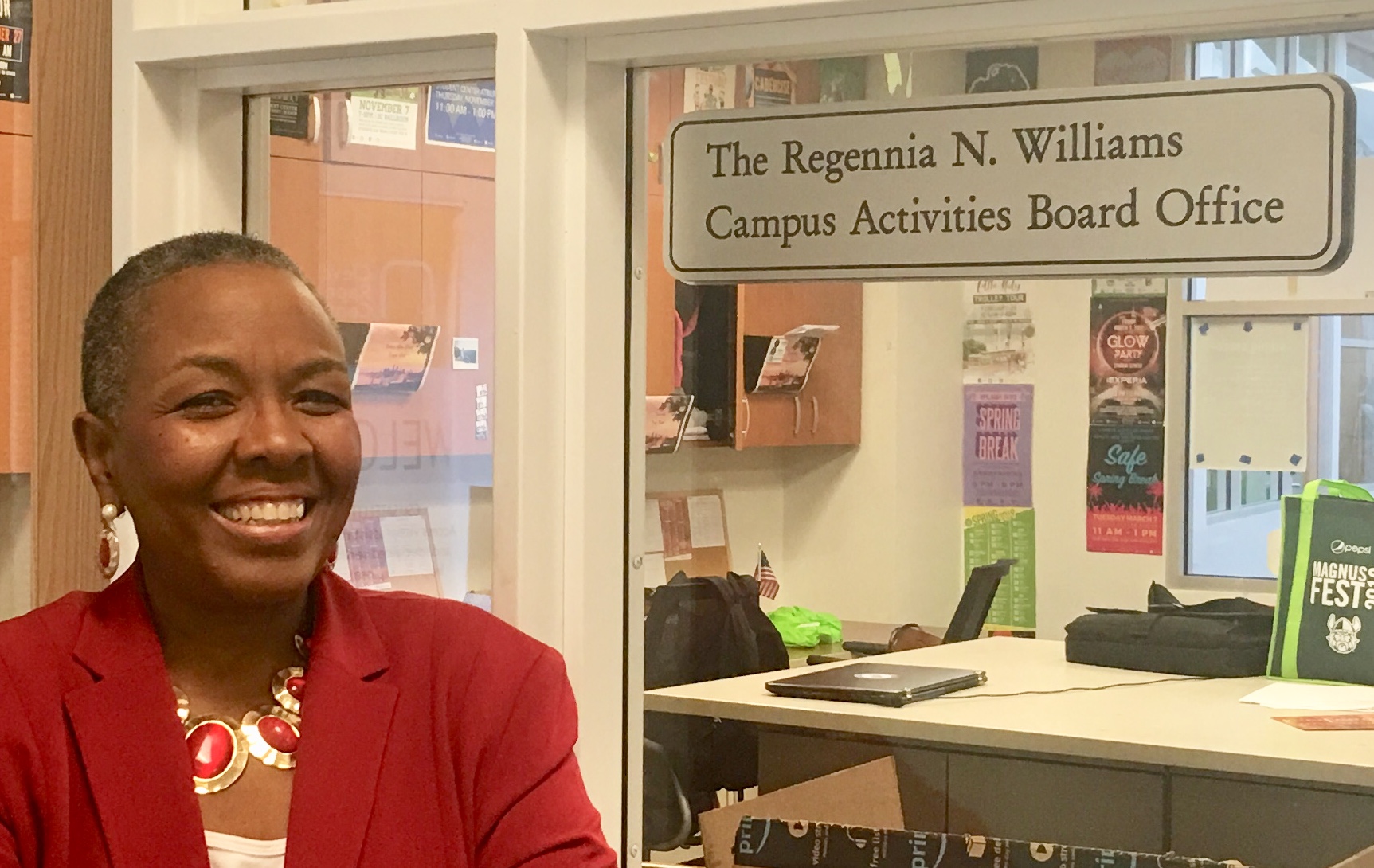
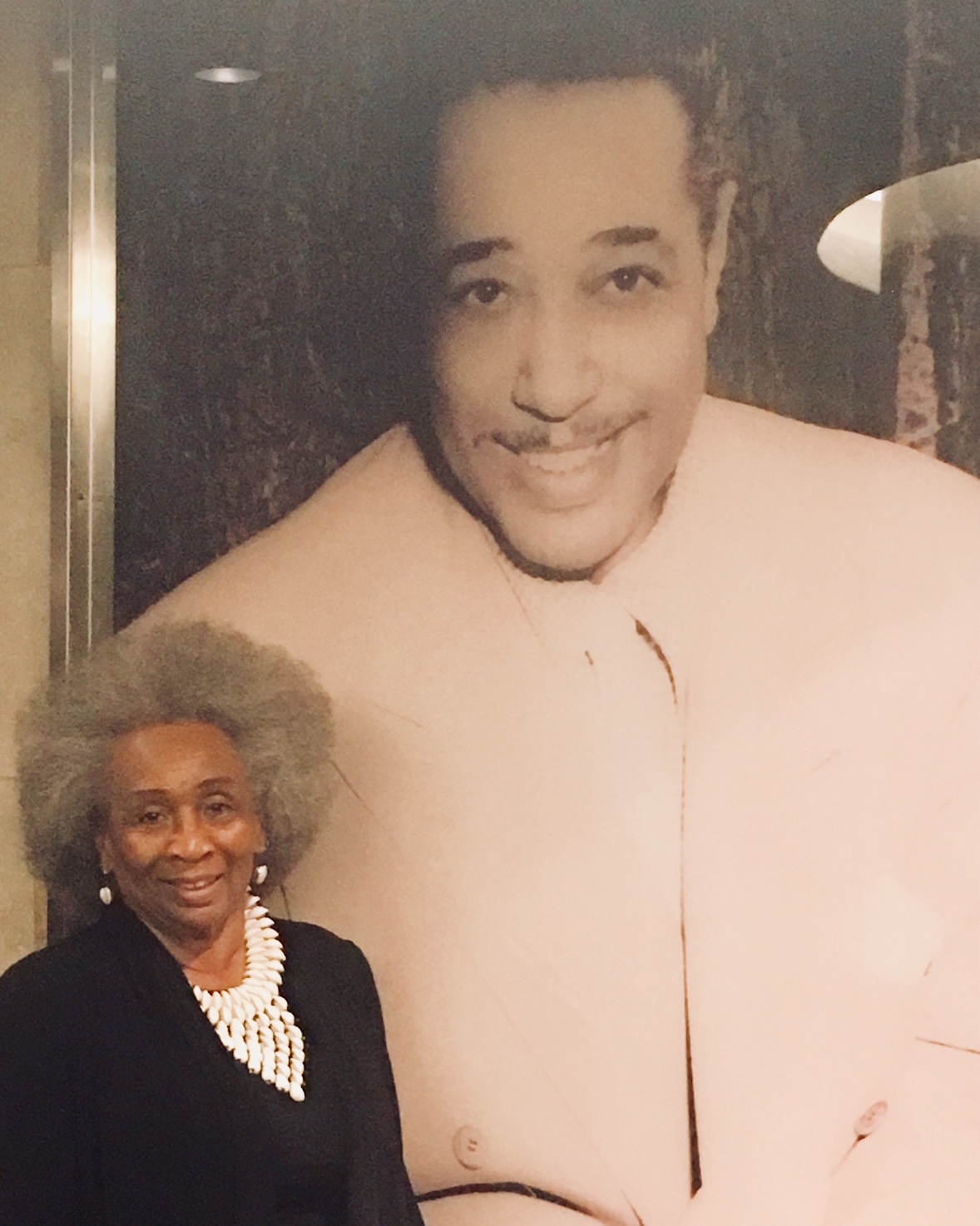
Dr. Regennia N. Williams, founder and director of the RASHAD, Center, Inc., is shown here in a September 13, 2018 photograph that was taken outside Cleveland State University’s Regennia N. Williams Campus Activities Board Office. Dr. Williams is a CSU alumna.
October is National Arts and Humanities Month, and you are cordially invited to join me for celebrations in Maryland and Ohio! I plan to highlight a different project each week, so please follow the RASHAD Center’s blog for more announcements.
If your schedule permits, please plan to attend “DMV Jazz: Building Bridges Between Arts and Humanities Communities throughout the Mid-Atlantic,” my presentation for the 6th Annual Humanities Days @ Montgomery College, on Monday, October 22, 2018, 9:00 a.m., in Commons 211. This program will take place on the Takoma Park / Silver Spring campus, and the address is 7600 Takoma Avenue, Takoma Park, MD 20912.
As information on the Montgomery College website suggests, “Humanities Days @ Montgomery College (October 22-26, 2018) is our annual Collegewide celebration of the humanities. Each year the College hosts 40+ separate events across our three campuses including films, lectures, workshops, student-led open mic sessions, and performances. These events can help students and other participants to see how the Humanities add value and perspective to lives and to their studies. All Humanities Days events are free and open to the public on a space available basis.” Please click here for directions and a campus map.
The program description follows. Thank you! –Dr. Regennia N. Williams.
Description: Dr. Regennia N. Williams, Instructor in the Lifelong Learning Institute and Part-Time Faculty Associate at Montgomery College, discusses her forthcoming co-authored book, Washington, DC, Jazz. This illustrated lecture will include excerpts from oral histories and other audio-video materials related to her research on Maryland-based artists as well as those from Washington and Virginia.
Biographical Sketch: Dr. Regennia N. Williams is an instructor in the Lifelong Learning Institute and a Part-Time Faculty Associate at Montgomery College. She also serves as the Museum Scholar at the Edward E. Parker Museum of Art. A native of Cleveland, Ohio, from 1993-2015 Williams served as a faculty member in the Department of History at Cleveland State University, where she established “Praying Grounds: African American Faith Communities, A Documentary and Oral History Project,” The Journal of Traditions & Beliefs, and the Initiative for the Study of Religion and Spirituality in the History of Africa and the Diaspora (RASHAD). In 2016, she moved to Maryland and established the RASHAD Center, Inc., a non-profit educational organization. A Fulbright alumna (Nigeria 2010), she participated in the summer 2018 Montgomery College in Macau China professional development and teaching program. In July 2018, she was approved for a summer 2019 Fulbright Specialist Project at South Africa’s University of the Free State. Other international research, teaching, and performing arts activities have taken her to Canada, France, and Austria. Her current research focuses on the history of jazz and the legacy of the Black Arts Movement in the museum world.
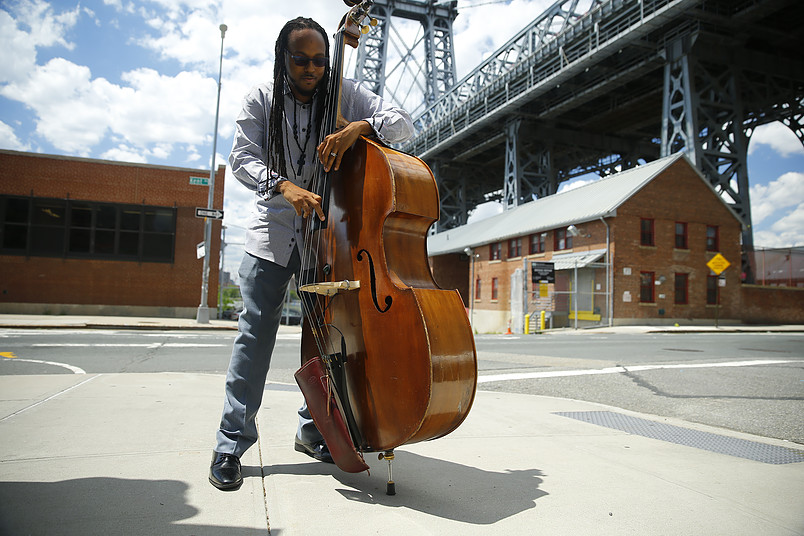
“I am always going to be a Washingtonian. I’ve been in New York for 13 years, but I still represent Washington DC!” –Corcoran N. Holt, 2017
Corcoran N. Holt
CORCORAN N. HOLT is both a freelance bassist and a group leader in his own right. An alumnus of the Duke Ellington School of the Arts and the DC Youth Orchestra, he completed his undergraduate studies at Shenandoah Conservatory in Virginia, and he earned his graduate degree at Queens College in New York. His key musical influences include Duke Ellington, Keter Betts, Reggie Workman, Paul Chambers, Ray Brown, John Coltrane, Miles Davis, Charlie Parker, Kenny Garrett, Christian McBride, Davey Yarborough, and Holt’s father, Ibrahim Diakhate (formerly Keith Lamarr Holt), among others. During his December 19, 2017 telephone interview for the Washington DC Jazz Oral History Project, Corcoran Holt admitted that, during his college days, he “was always coming back to DC!” Later, when he moved to New York, he continued to return to DC, for performances at Bohemian Caverns, Blues, Alley, Twins Jazz and other venues and to spend time with family and friends. For these reasons, Holt—who also holds the record for our longest oral history interview to date, is the first narrator to be included in Part II of this project, “Washingtonians-at-Large.”
“I have my own group, the Corcoran Holt Quintet, as well as the Corcoran Holt Ensemble, which is the larger group. I play with a lot of different groups on the scene here in New York as well as around the world, but the group that I’ve currently been a part of, that tours quite a bit, and that I’ve been recording with, primarily, is the Kenny Garrett Quintet. I have been with that group for eight years . . . Right now, I am really focusing in on getting my project out in the next couple of months, which is under my own name. . .”
“ . . . I have worked as a professional musician since I was 17, when I was still at Duke Ellington [School of the Arts] . . . I always say that once you are paid for a gig, then [musicians] can say they are professionals. My first time getting paid playing the bass was when I was still at Ellington. Then, as far as my career [is concerned], it really got started after I graduated from Ellington in 2000. Ever since then, this has been my only career, the only thing that I have every done—except for working at the Department of Defense for two months, as a summer job when I was at college . . .”
“My primary instrument is upright bass. My first instrument that I started on before I ever played bass was West African percussion . . . Djembe . . . Dundun . . . I started on percussion when I was four, and I switched to bass when I was 10. I play both now. I make my living, mostly, as a bass player . . .”
“I was introduced to those drums by my father. All of the instruments that I play, my father introduced me to those instruments. When I was young, when I was, like, four or five, he wanted to get me and my sister involved in the arts . . . So he put me in a drum class which was Wose, the African Drum and Dance Company in North DC . . .”
“ . . . Then I wanted to play the regular drums, the drum set. So, my father went to the Youth Orchestra when I was 10 and tried to sign me up for percussion, but there were no available spots in DC Youth Orchestra for percussion, so he signed me up for bass for two reasons; one of the reasons being my great grandfather, who I share a birthday with, was a bass player in the High Point – Hamlet area of North Carolina. He was a bass player and a music teacher. I am not exactly sure how far he went professionally, but he actually lived next door to John Coltrane, when John Coltrane was a kid . . . My great grandfather taught him bass when he was a little kid. This was before he played saxophone, clarinet, and all those wind instruments.
“My great grandfather was a musician. My grandfather [Clarence Holt] wasn’t a professional musician (This is all on my father’s side.), but he played trombone. Everybody was a music lover. So my dad was like, ‘Okay, there aren’t any available spots in DC Youth Orchestra for drums, percussion, but I am going to sign him up on bass, because our family has history, and also the bass also holds the time along with the drums. It is still a rhythm instrument. It goes hand-in-hand with the drums.’ He thought that would be good for me.”
“ . . . Yeah, it has been good for me. It was a hard instrument to start on, for sure. It took me a few years to really enjoy it. I was still drumming, and I just really wanted to play percussion at first. Davey Yarborough lives across the street from my godparents in Northeast. My father had met him, and they were always talking. Now, Mr. Yarborough wanted me to come to Duke Ellington for bass when I was 13. So I ended up going to Duke Ellington . . .”
“From that point on, I got pretty serious with it, once I was introduced to Jazz. I was playing Classical on bass, and it was cool, but it was very technical. I was trying to find a connection between percussion and the bass . . . Mr. Yarborough was playing with Reggie Workman in a big band at Lincoln Theatre, so I went there when I was 14, when I was at Ellington.”
“Reggie Workman took this solo, this open bass solo. It absolutely blew me away. From that point on, I was like, okay, I can see this is very interesting to me. It was kind of like the first time that the bass was actually very interesting to me, even though I had been playing it for four years. After that I was inspired to really do it. I fell in love with the music at that point, once I got to Duke Ellington, and I knew that was what I wanted to do . . .”
“ . . . I am always going to be a Washingtonian. I’ve been in New York for 13 years, but I still represent Washington DC!”
Interview Date: December 19, 2017
All Interviews Conducted, Recorded, and Reviewed by
“I heard a young minister, William Lamar from Metropolitan AME Church, say, ‘All music is God’s music!’” –The Rev. Dr. Sandra Butler-Truesdale
The Rev. Dr. Sandra Butler-Truesdale
THE REV. DR. SANDRA BUTLER-TRUESDALE is the founder and director of DC Legendary Musicians, Inc. I interviewed her on May 9, 2017 for the Washington DC Jazz Oral History Project. That interview took place at the historic Howard Theatre, and I am pleased to share part of that interview with you.
*The following passages contain excerpts from the full interview.
“This is my home. I am a fourth-generation Washingtonian. I call myself a Washington DC historian. It’s an unofficial title only because I am not a learned historian. I did not get a degree as a historian. But, because I have been here all my life, and, somehow people are always asking me questions about Washington DC, Channel 24 gave me that title as a historian for Washington, DC . . .”
“I am going to tell you that there are two Washington DCs. There is the ‘Federal City ‘and then there is the ‘Community’ part of Washington DC. I am not a ‘Federal City’ historian. I am a ‘Community’ historian. That is different, because a lot of people don’t really know that there is a city that surrounds the federal enclave. . . . There are people who really don’t know that there are people who actually live in Washington DC.”
“There is an endearment, I think, among those of us who were born here, who are residents here. As a matter of fact, there is, according to those of us who were born here, a difference between the ‘Washingtonian’ and the ‘Native Washingtonian.’ There is even a difference in ‘how many generations of Washingtonians’ you think you are. . . Terms of endearment: ‘Native Washingtonian’ and ‘Washingtonian.”. . . I am a fourth-generation ‘Native Washingtonian!’”
“. . . The whole city is mine, but I am a “Northwest Girl.” My mother and my grandmother and my great grandmother all were from Northwest Washington. We come from what was once known as “Midcity” and is now known as Dupont Circle. I was raised–my mother, grandmother, and great grandmother–at 1458 Corcoran Street NW, Washington DC . . . Northwest . . .”
“. . . I heard a young minister, William Lamar from Metropolitan AME Church, say, ‘All music is God’s music.’ I had never really thought about it that way. I had never really thought about ‘secular,’ in particular. I always loved music. I was raised on March and Jazz and Classical music I became involved in religious music at the age of nine, at the Church of God pastored by Elder Lightfoot Solomon Michaux. I sang in several choirs. I still had not figured out that there was a difference in the music. Dr. Lamar explained that for me. [He is] a brilliant minister in the AME faith.”
Interview Date: May 9, 2017
All Interviews Conducted, Recorded, and Reviewed by
“I am very passionate about performing.” –Nia Alsop
Nia Alsop
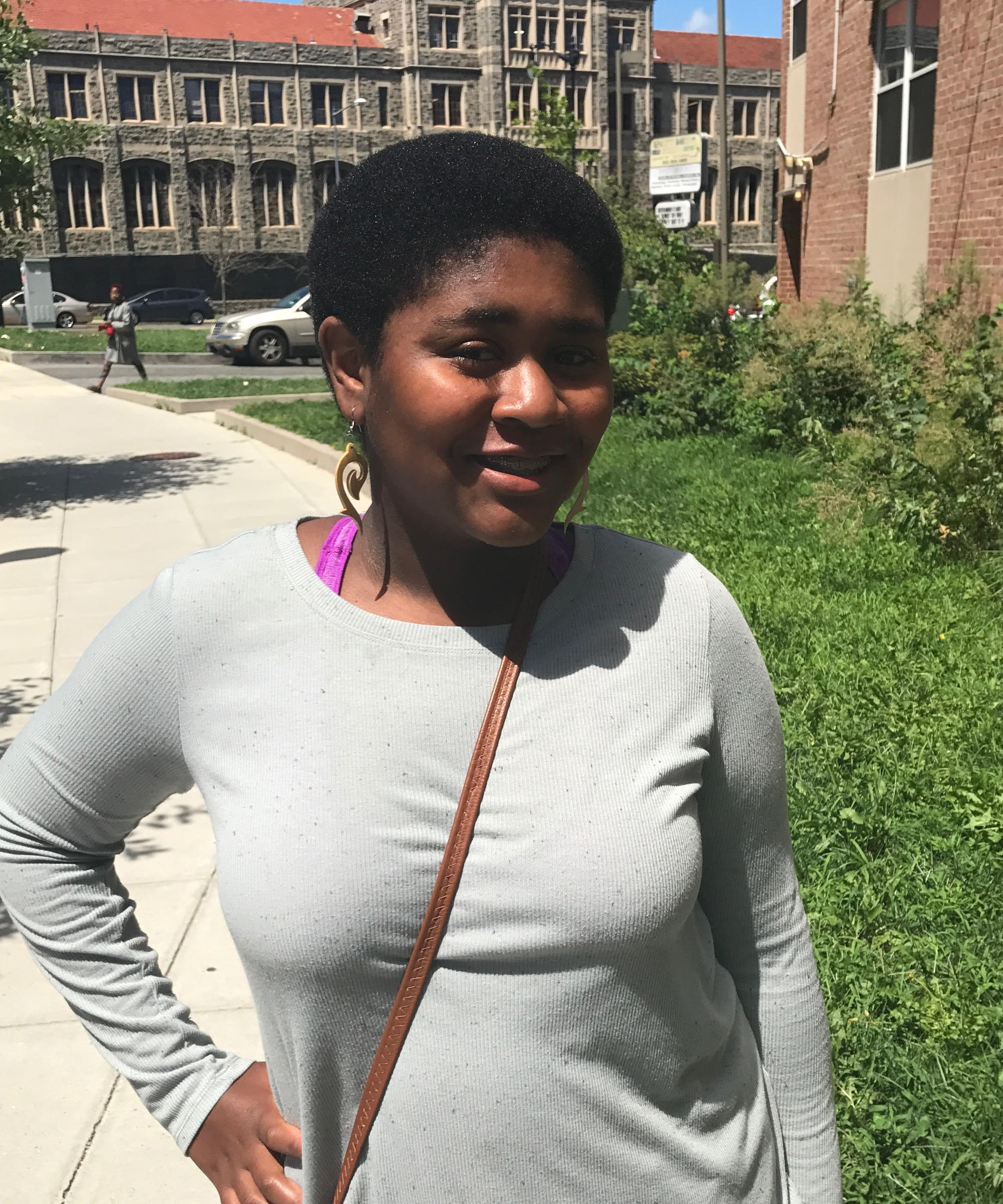
NIA ALSOP—a native of Baltimore, Maryland, is an alto who loves Jazz and musical theater. Born in 2004, she was one of the youngest narrators for the Washington DC Jazz Oral History Project. During her interview on January 15, 2018 – the 89th anniversary of the birth of the Rev. Dr. Martin Luther King, Jr.—Ms. Alsop discussed her musical mentors, teachers, and some of her favorite vocalists.
*The following passages are excerpts from the full interview.
“I have been a musician ever since I was five years old. My voice is my primary instrument of choice. I was born in Baltimore, Maryland in 2004. . .”
“My parents loved music, no matter the genre. I like a lot of Soul and Oldies, because that is what my mother listened to a lot, so those were my favorite genres. Now, I am more into musical theater and Broadway-style songs.”
“When I was younger, my mentor was my music teacher, Mrs. Latoria Pergerson. As I got older, it was Mrs. Denyse Pearson [-Williams]. She was my vocal coach. [Mrs. Pergerson] used to teach music at my elementary school, but now she has transferred over to my middle school, so she is still a vocal teacher for me [in 2017].
“Most of the time, I’m singing with my school ensemble, but sometimes solo vocal opportunities present themselves . . . Last year, I was singing with my ensemble, and we focused on African songs, in different African languages. Now, we are learning slave hymns, but we just got done learning the ‘Hallelujah Chorus,’ so it varies a lot . . .”
“[Mrs. Denyse Pearson-Williams] really helped me a lot. I would go over her house during the weekends, and she would just teach me things– like basic vocal exercises, just to warm up my voice, and how to preserve my voice. She taught me about what parts of my body to use to sing—and what parts you shouldn’t use. She was just really great about helping me discover my voice . . . We would focus on Jazz music. Her husband would usually play an instrument, she would play the piano, and we would sing Jazz songs . . .”
“I like the way [Esperanza Spaulding’s] voice sounds. It is very smooth, and I like the message she gives out—like in her song ‘Black Gold.’ I like that song a lot.”
“I am very passionate about performing. I am more into musical theater-type performing. That is because I have visited New York a lot, and I got to see great plays a lot. So it inspired me to want to be on Broadway. Now, mostly what I listen to is musical theater songs . . . “
“One of my favorite artists is Barbra Streisand, because she has a really strong voice, and she hits really high notes . . . Another musician that has inspired me is Minnie Riperton, because of her style of music and the way that she expresses herself. I love her music.”
“I just couldn’t get away from the music!” – Keanna Faircloth
Keanna Faircloth
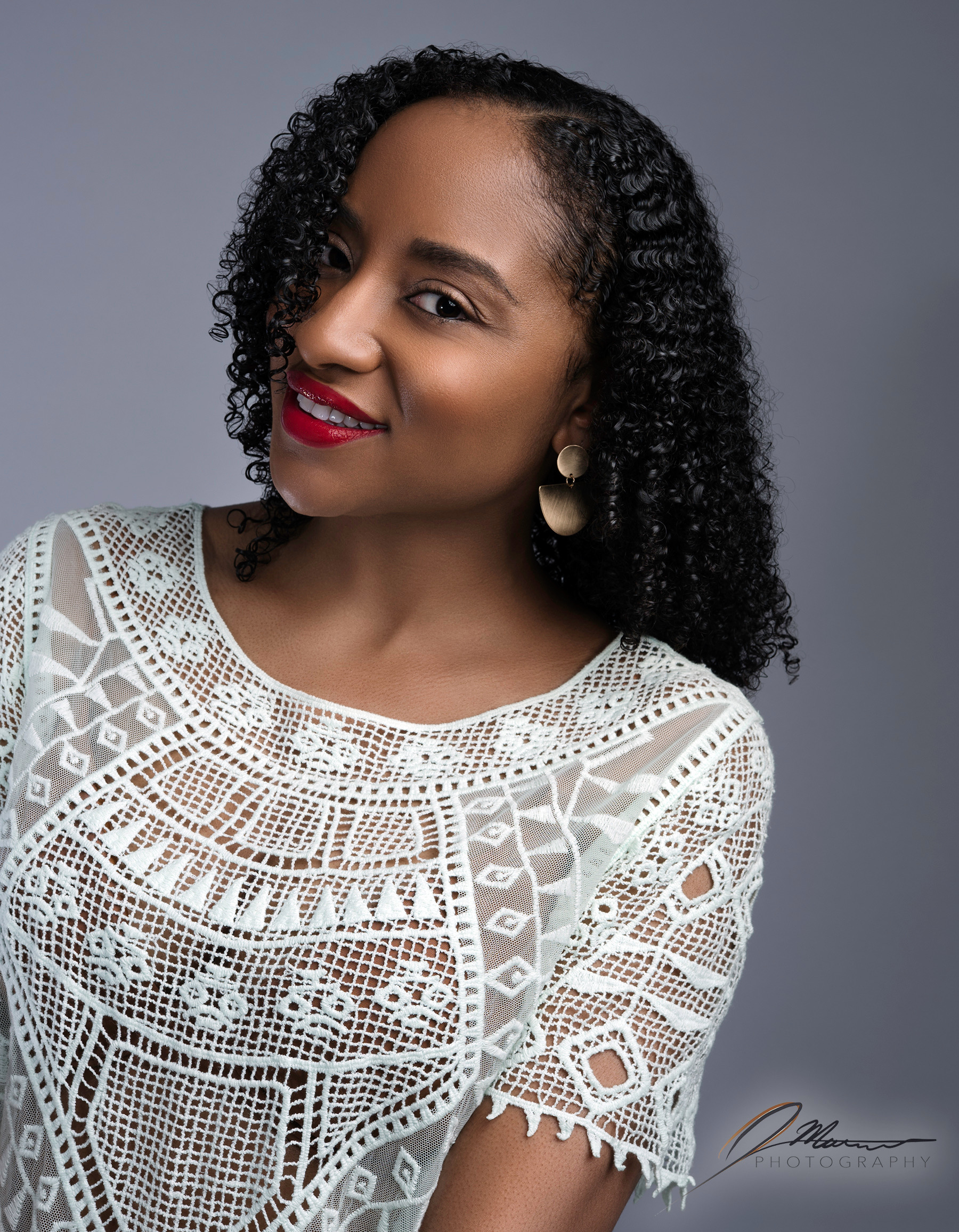
KEANNA FAIRCLOTH – a native Washingtonian and Howard University alumna, is the host of “Tuesday Evening Jazz” on WPFW 89.3 FM. During her May 13, 2017 interview for the Washington DC Jazz Oral History Project, she discussed, among other things, her music-loving parents and her early exposure to the performing arts.
*This following passage is an excerpt from the full interview.
“I am Keanna Faircloth, and I am an on-air programmer and host of “Tuesday Evening Jazz” at WPFW 89.3 FM. I started there in August of 2003, so it will be 14 years in August [2017]. I started working, actually, for WKYS 93.9 FM when I was in high school . . . But my first opportunity hosting my own program was with WPFW. It was absolutely the mission –“Jazz and Justice” / the music and the message–and especially Jazz [that attracted me to WPFW].”
“I grew up in DC, born and raised here. I was kind of an odd kid, I guess. I loved Jazz from a very young age. My parents actually exposed me to Jazz when I was very young, and I would find myself being the only kid in the Jazz club– at Blues Alley with my parents– watching different groups. I came to love the music.”
“I grew up playing piano myself. When I found out about WPFW, it was like something led me to walk to the station from Howard one day. I was a student at Howard University, a sophomore at the time. I just simply wanted to inquire about an internship, so I walked I don’t know how many blocks from Howard to WPFW, when they were located on Champlain Street in Adams Morgan . . .”
“I went up there, and the first person I met was Yolanda Turner, who was the Music Director at the time. She was kind enough to say, “Yeah, we can make a space for you, if you just come and volunteer your time.” And the rest is history.”
“One day, I was there interning–doing the Jazz Calendar, which was one of my assignments– and the host for the “Midday Jazz” program that Tuesday was not able to come in for some reason, and they didn’t have anybody to host the show. Just like that, she was like, “Well, do you want to fill in?” (Laughter] I reluctantly said yes, but I must have done an okay job . . . I ended up hosting “Midday Jazz” for about nine years after that.”
“. . . I love Jazz, and I wanted to help the station in some way, not necessarily with the goal of hosting a show. I don’t know if it was a God thing or what. The opportunity presented itself very suddenly, as I mentioned, and I just found myself falling in love with the station, sticking around, 14 years later . . .”
“I went to Howard. I was a Music History major, and I minored in Classical Piano. I was, at one point, a musician. I still teach piano to children. I also sang; I was a member of one of the Jazz choirs at Howard, SaaSy [a women’s Jazz vocal group] . . . After graduation, I sang a little bit with Afro Blue, which is the Jazz vocal ensemble. I love music and I am musically-inclined myself.”
“[My parents] are lovers of music and always exposed me to music and the arts. I grew up participating in choirs. I sang with the Children’s Gospel Choir of America. I did two tours of Europe as a child, where I sang and also played piano. I danced with the DC Youth Ensemble, and studied piano, mostly under the tutelage of a woman named Claretta Carroll, out in Temple Hills, Maryland.”
“I went to [Benjamin] Banneker High School. I wanted to go to Duke Ellington [School of the Arts]. I auditioned, I got in, but my mom said, “Well, I think you should focus more on the academics.” So the decision was made to go to Banneker, which I don’t regret, but I continued to study piano on the side. I just couldn’t get away from the music. Upon graduating from Banneker, I did get a scholarship to Howard for Music, so I did get back into it, eventually.”
Interview Date: May 13, 2017
All Interviews Conducted, Recorded, and Reviewed by
“My style encompasses all of the styles that have influenced Jazz over the last hundred years.” – Kush Abadey
Kush Abadey
KUSH ABADEY – a native of Silver Spring, Maryland, is now based in New York City. He is a highly sought-after drummer for both live performances and studio sessions. The son of master drummer Nasar Abadey and Baiyina Abadey, Kush Abadey credits his parents with introducing him to the formal study of music and supporting his decision to become a professional performing artist. During his May 4, 2017 interview for the Washington DC Jazz Oral History Project, he discussed, among other things, his educational journey—from his preschool days at the Howard University Early Learning Program, to home schooling during his senior year in high school, through undergraduate studies at the Berklee College of Music.
*This following passage is an excerpt from the full interview.
“I have worked as a professional musician for the last 16 years of my life, and I am now [in 2017] 26 years old . . . I started preschool at the Howard University Early Learning Program. . . The first and the biggest influence that I have had up until now is my father, Nasar Abadey. He began [teaching] me on the drums at the age of two. I also began to play hand drums when I was in elementary school, and I took a djembe class. At the age of six, I started to take piano lessons with a guy by the name of Harlan Jones. I studied with him from the age of six until about 13, and he gave me a great deal of information.”
“After that, maybe by the age of 13, I started studying with a world percussionist by the name of Tom Teasley at the Levine School of Music. He taught me a wide range of percussion techniques, and he taught me how to read different percussion instruments—how to read them on paper, how to also write certain rhythms out. He taught me snare drum and other orchestral percussion. I studied with him for maybe five years . . .”
“I also studied jazz composition and improvisation at the Levine School of Music with Jeffrey Chappell, a piano player. Then I got a full scholarship to the Berklee College of Music in 2009 . . . Terri Lyne Carrington was actually the reason I went to Berklee, so I studied with her. And I studied with Ralph Peterson there, Yoron Israel, John Ramsey, and quite a few others in composition and other things.”
“I am currently living in New York . . . I moved here in 2012, [following] a year hiatus after Berklee. I went back to DC for about year, then I came to New York.”
“[Key influences include] my father and trumpeter Wallace Roney, who molded me from the age of 16 to, I would say, around the age of 23, in developing a voice of my own and influencing my playing and approach to the music, how to play the drums, how to write music. I think those two [musicians] had a very strong role in that, and still do . . .”
“My style encompasses all of the styles of that have influenced jazz over the last hundred years. I would say I don’t limit my style of playing to just Straight-Ahead, although Straight-Ahead Jazz does and will always have a huge influence on my playing, whether I am playing R&B, Reggae, Rock . . . The improvisational element and the reaction element of Jazz, will always affect whatever I play.”
“It’s kind of hard to really label how I play, stylistically. When people ask me, I just say I am primarily, at heart, a Jazz drummer, but I try to stay as versatile as possible.”
Interview Date: May 4, 2017
All Interviews Conducted, Recorded, and Reviewed by
“In high school, I was listening to drummers like Cozy Cole, Ed Thigpen, Max Roach, Buddy Rich, and Art Blakey . . . My mentor to this very day is Harold Jones.” — Manuel Kellough
Manuel Kellough, Master Drummer
MANUEL “MANNY” / “THE DEACON” KELLOUGH – a native of Los Angeles, California, is a master drummer and a member of DC Legendary Musicians, Inc. With roots in the Gospel music of LA’s Baptist Church community and branches in just about every other musical genre, Kellough is the recipient of four gold records for work with Billy Preston, a gold album for work with Larry Graham and Graham Central Station, two Grammy Awards for work with Billy Preston, and a Grammy nomination for work with Larry Graham. An alumnus of the University of Southern California, he recently celebrated 56 years as a professional musician. From his first professional public performance outside the church at the age of 13 through his current gig running the Jazz Department for Royal Caribbean Cruise Lines, he has traveled the world, and he says he is still watching, listening, and learning. During his May 2, 2017 interview for the Washington DC Jazz Oral History Project, Manny discussed his family, his career, and an important lesson that he learned from Ray Charles.
“I started playing drums at the tender age of eight years old at the Pleasant Hill Baptist Church in Los Angeles, California . . . It’s funny, because I did not even know that I could play drums. It was just something that I knew I wanted to do. I used to sit and watch Deacon Avery play. I never will forget, I would watch him play every Sunday. I would say, ‘Deacon Avery, I want to play the drums! Can I play the drums?’”
“I guess he got tired of me asking him. One Sunday he told me, ‘Come on up here young fella and play.’ So, I sat down. From watching him every Sunday, I just started doing what he was doing . . . Just watching . . . and to this very day, I watch.”
“That was the norm (having the drums in church). It wasn’t a full drum set. It was the bass drum and the snare drum. That’s all it was. There were no cymbals. It was just being able to sit down and play that beat (demonstrating with hands and feet). That beat would work forever–on any song!”
“Growing up, I listened to a lot of different drummers. In high school, I was listening to drummers like Cozy Cole, Ed Thigpen, Max Roach, Buddy Rich, Art Blakey, and my mentor to this very day is Harold Jones. He’s Tony Bennett’s drummer. I started listening to Harold Jones back in my high school days, when he was with Count Basie.”
“ . . . Vocalists love the way I play, because I am not in their way. I love for them to have the freedom to do whatever they want . . . My style of playing is, ‘Less is always more.’ Play, but not play. Never be in the way . . .I don’t have to have a solo every time. Me, personally, I don’t even like solos . . . I love being an accompanist. I love to swing. Brush work, swinging, things like that . . .”
“I don’t need to be the one out front. Ray Charles told me that one year. I played with Ray Charles when I was like 17 years old. Scared to death. We had a little high school band called Rhythm Rebellion that Ray Charles used to manage. He took us out on the road for exposure. He took us under his wing. I will never forget we were in Cherry Hill, New Jersey–at the Latin Casino, and Ray’s Drummer got sick on a Friday night. So, who else was there to jump right in the pit at the last minute? Manny!
So, here I am scared to death. You’d sit right behind him. You’d sit right in Ray’s ear all the time. You [couldn’t] play too loud, and you [couldn’t] be overpowering. So, I’m sitting there playing. I’m getting excited, a little cocky drummer, 17! I had my cymbals nine feet in the air . . . Then I would jump up and hit the cymbals . . . BAM! So, he turned around and said, ‘Uh, wait a minute, baby, this is not your show. One day, your name will be on the marquee, and it will be your show, but, until then, darling, wait your turn.’ . . .That allowed me to grow up, as a drummer . . . from being a boy to being a man.
Interview Date: May 2, 2017
All Interviews Conducted, Recorded, and Reviewed by
“I try to do a little bit of everything to bring as many people into my music as I can.” –Mark G. Meadows
Mark G. Meadows
MARK G. MEADOWS – a DC-born, classically-trained pianist, keyboardist, and composer– moved to Dallas at the age of five, and lived a bi-regional life (in Texas and DC), due to his family’s ties to both areas. After graduating from high school, he enrolled in the Peabody Conservatory’s Jazz Studies Department, and the rest, as they say, is music history! In his May 2017 interview for the Washington DC Jazz Oral History Project, Meadows, who had just returned from travels and performances in Africa, discussed his efforts to create music that he described as “genre-less.”
“I am influenced by many genres. My dad used to always play Stevie Wonder, Earth, Wind, and Fire; Ahmad Jamal, and Miles Davis. We were also a big Gospel family. We went to church every Sunday. Although I did not play my entire life in the church, I was around the music, and I heard it.”
“I went to St. Luke United Methodist Church in Dallas, Texas, which is where an amazing keyboardist named Bobby Sparks was the organ player. Bobby Sparks tours with the best, the greatest. Just hearing that music every single Sunday had a huge influence on my writing. Although I did study jazz and classical music, I think there is no way to hear my original music without hearing Gospel, R&B, Pop, and all these different influences that I was fortunate enough to have been around.”
“It’s not my doing. It is just whoever you believe in who put me in the world surrounded by all the people that have been giving me new music—and beating me over the head with hearing these recordings. It has definitely come out in my compositions and the way I play. . .”
“I hope that my music is a music that speaks to all different generations, and can touch everybody in a certain way: the people that like Straight-Ahead, the people that like Contemporary, the people that like R&B, Neo-Soul, Cool Jazz. I try to develop a sound that is almost genre-less, which, in many ways, isn’t the smart move, because, you want to have a sound so people can say, “Ooh, that’s this, and that’s what I like . . .”
“Part of who I am as an artist is someone who tries to really connect to people, and not always put a label on things. Just accept it, and let it be. That is what I aspire to and try to bring forth with my music . . .”
“So, I don’t really have a specific sound. I love Straight-Ahead, and you will hear that in my music. I love R&B, I love Gospel, I love Contemporary. I try to do a little bit of everything to bring as many people into my music as I can.”
Interview Date: May 3, 2017
All Interviews Conducted, Recorded, and Reviewed by
 As I continue to explore Black contributions to my twin loves of American music and art, I would be remiss if I did not confess that I am never surprised by the incredibly thought-provoking ideas that artists are willing to share with others.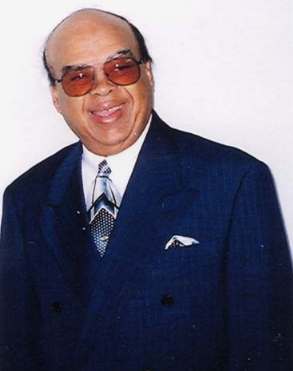



 The RASHAD Center, Inc.